
Shift
Shift reads your systems and maps the process that runs, not the one people describe in a workshop. Bottlenecks show up where they are, with the time they cost and the dollars sitting in them.
100+ enterprise teams trust Laminar with the systems that run their business.


Process discovery
Discovery usually means weeks of interviews that produce a diagram everyone agrees with and nobody follows. Meanwhile the real process, with its detours and rework loops, is sitting in field history nobody has read.
How Shift works
Every stage change, owner change, and timestamp is already in your systems. Shift reconstructs the process from that record: the paths cases actually take, how long they wait at each step, where they move backward, and what each stage is worth.
Process map
One map, built from field history, showing the variants people don't mention in workshops.
Process map
One map, built from field history, showing the variants people don't mention in workshops.

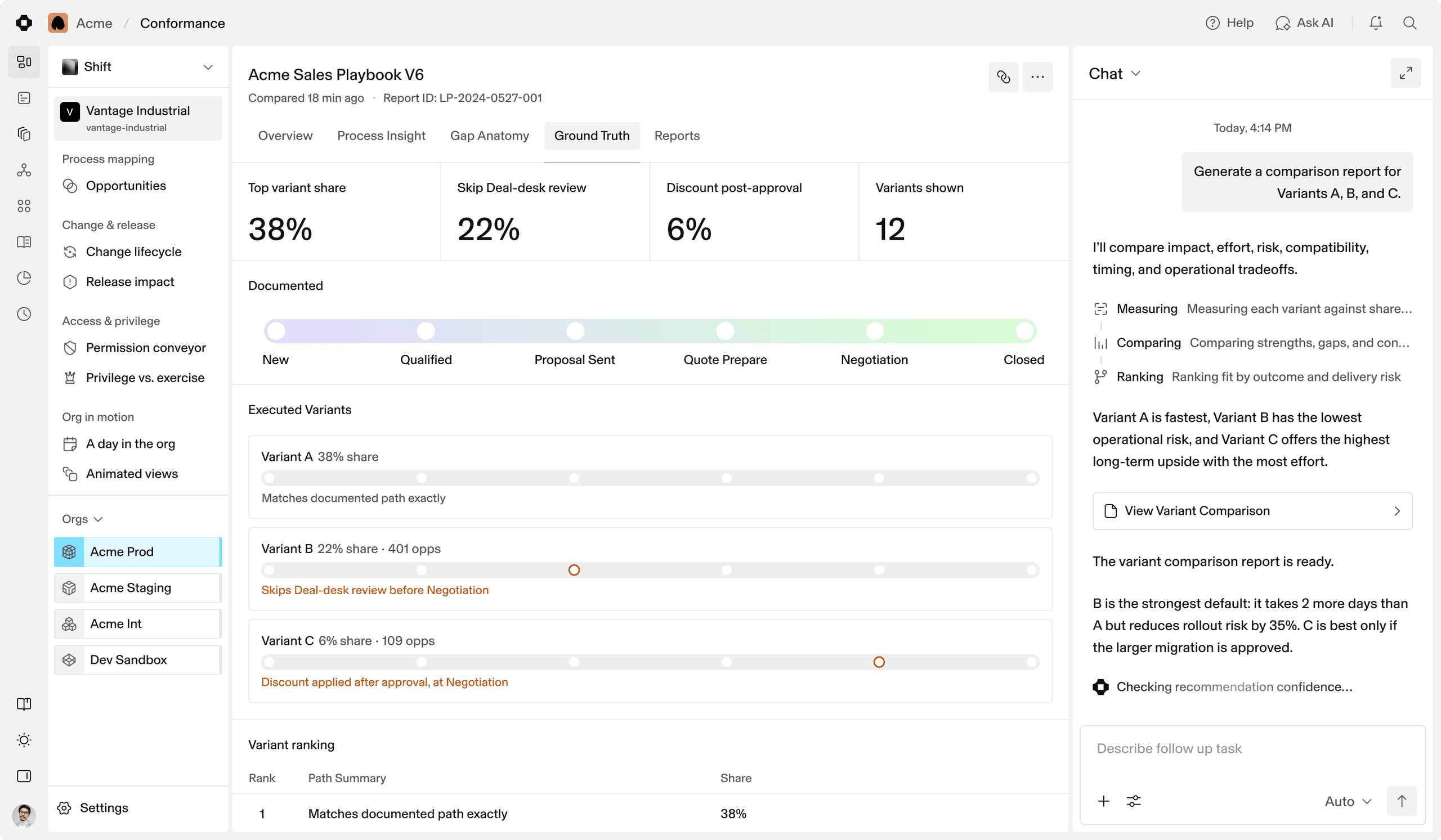
Every distinct path through the process, ranked by how often.
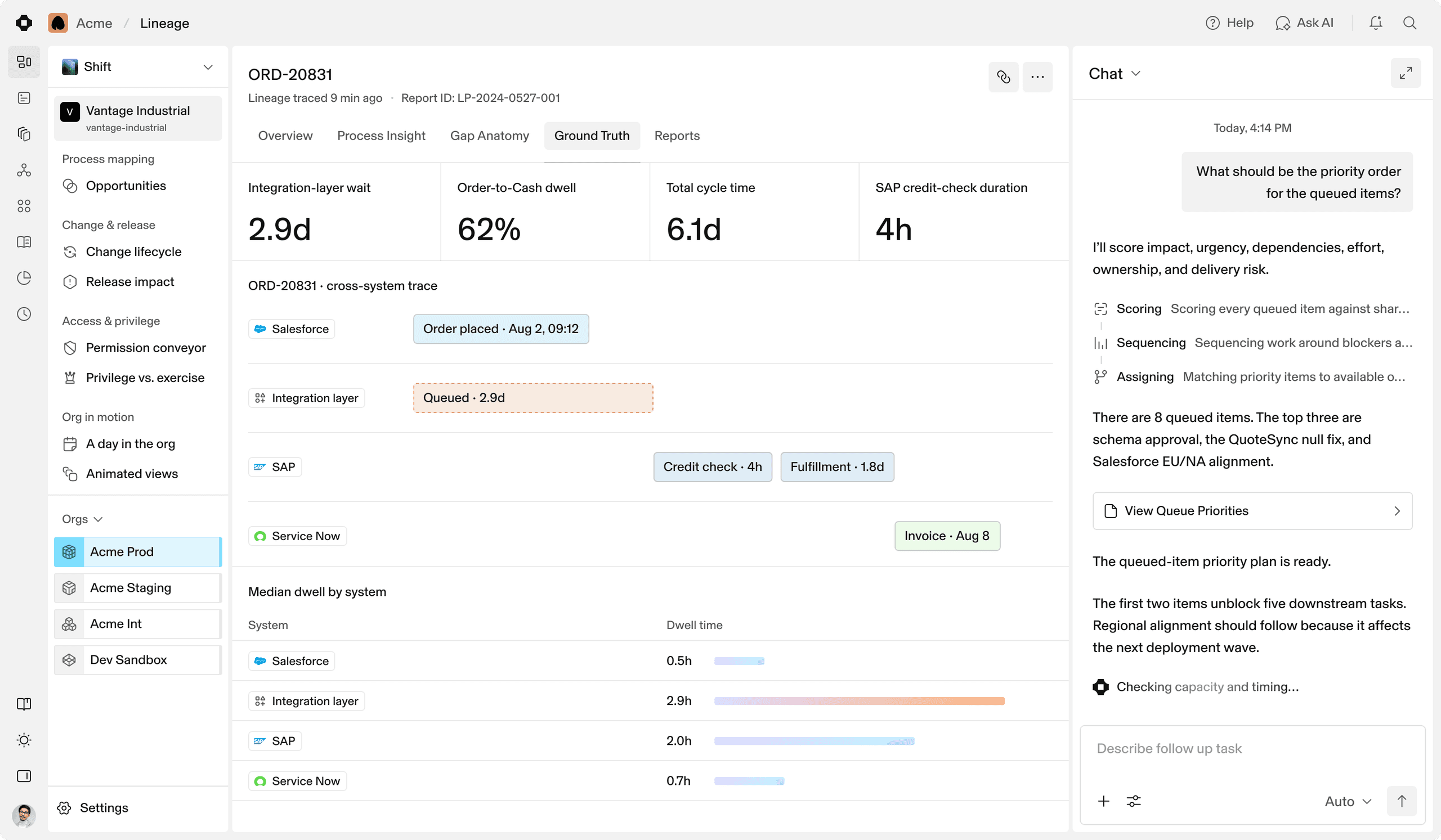
How long work sits at each stage and each system.
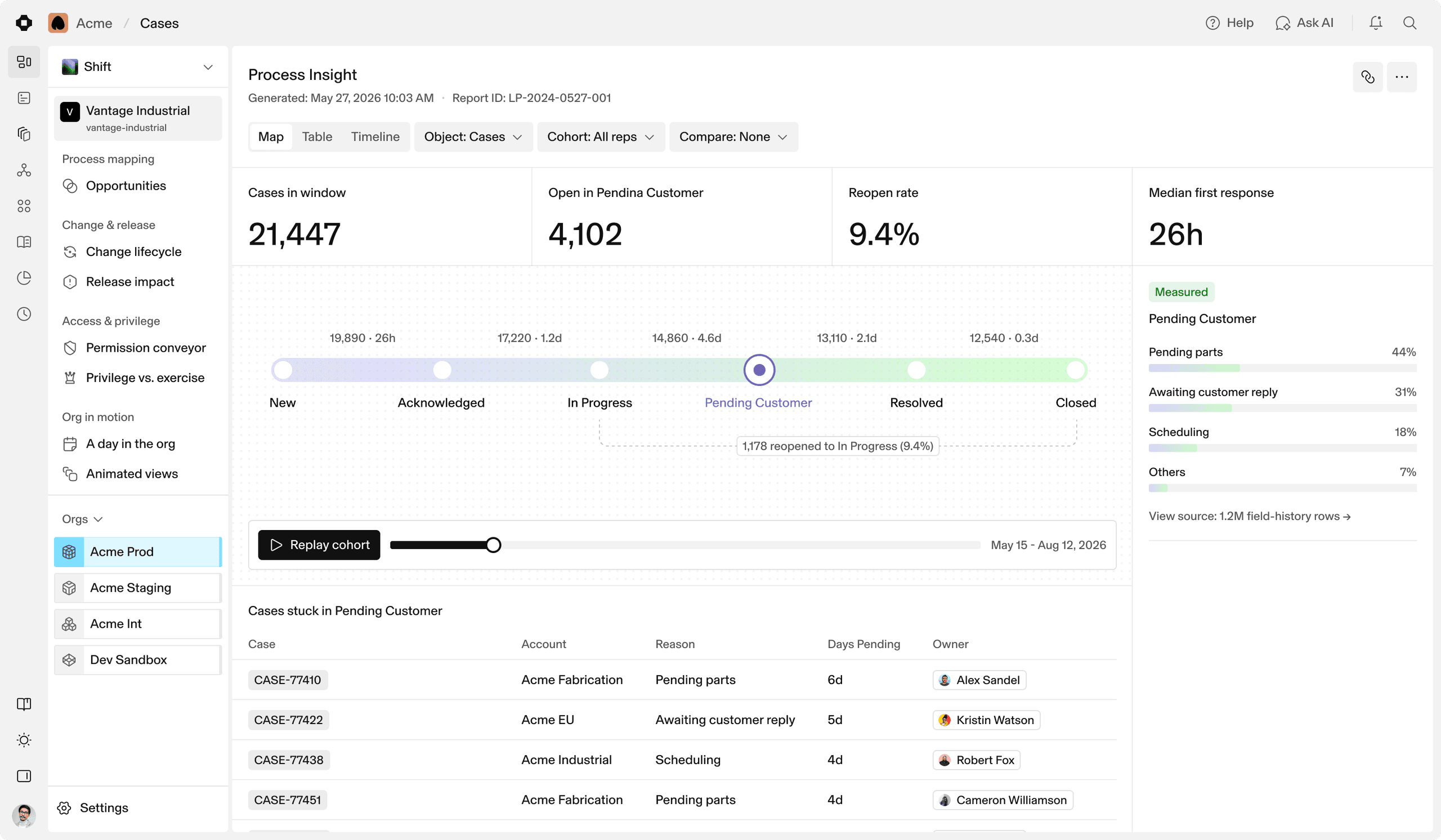
Where cases loop back a stage, and how often. Rework.
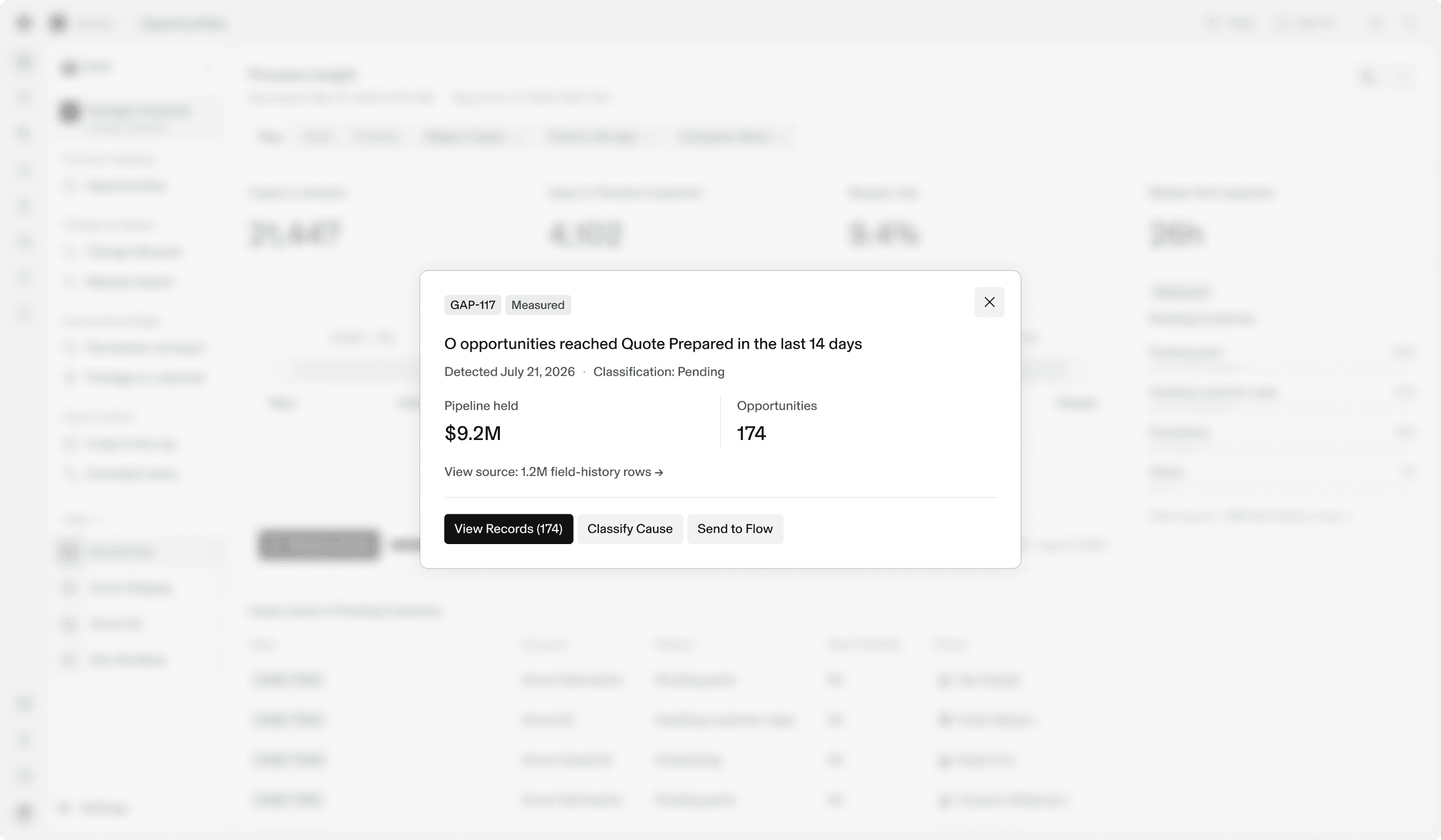
The value sitting at each step, so bottlenecks have cost.
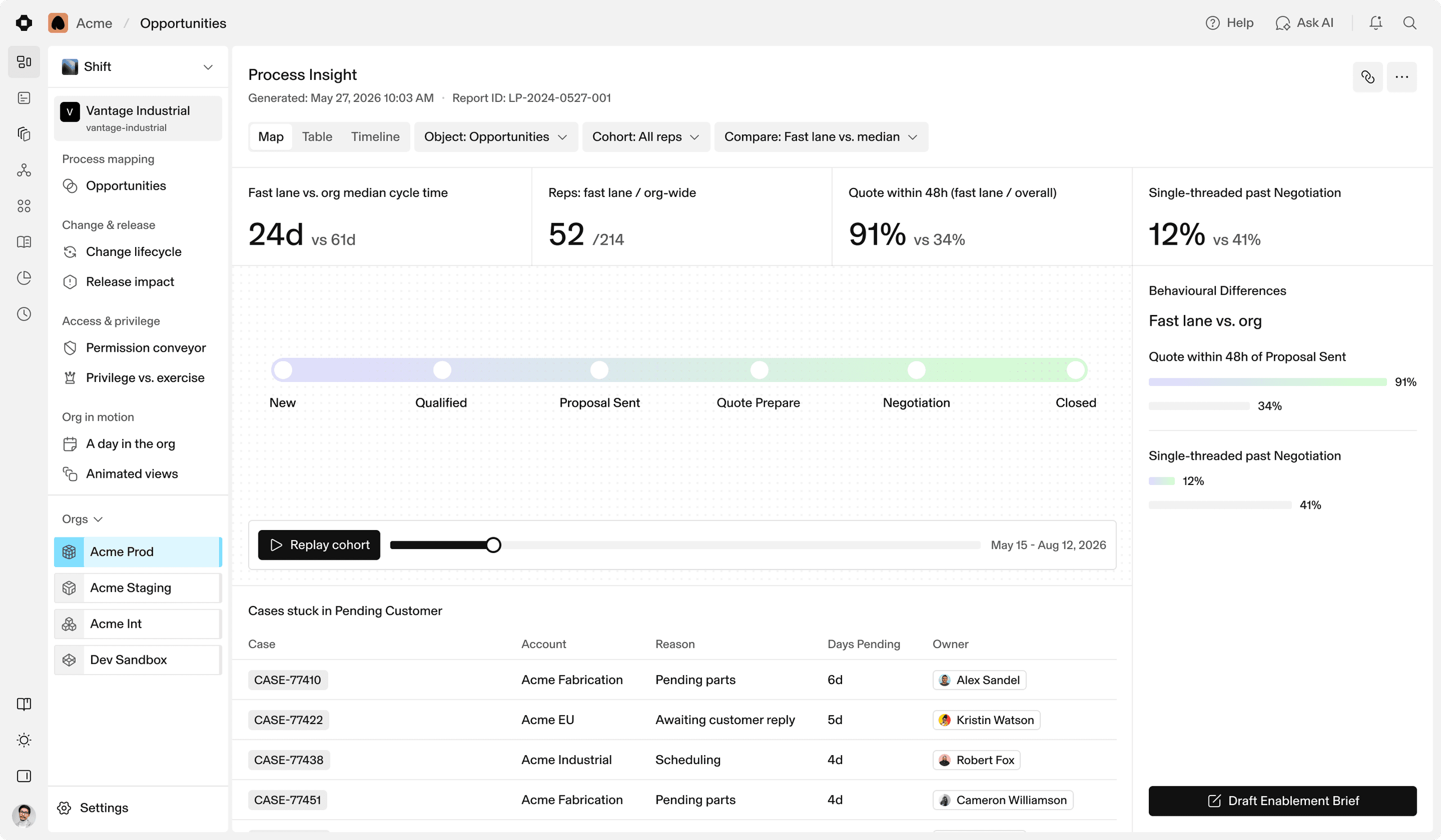
The same map filtered by who, where and when.
Bottlenecks
Shift shows where work stalls and what it costs to leave it there.
Bottlenecks
Shift shows where work stalls and what it costs to leave it there.
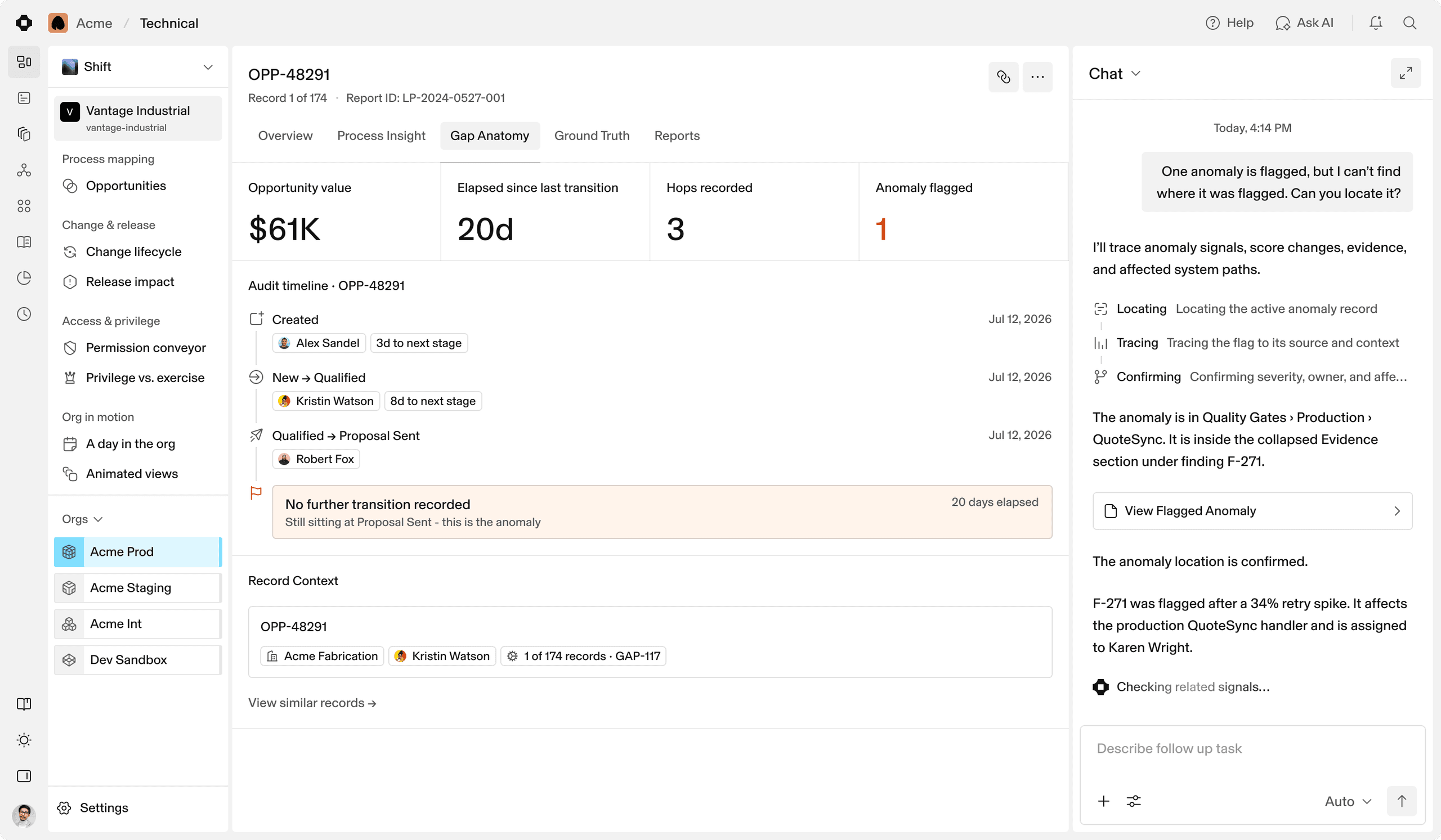
The stages where dwell time spikes, with the cases behind.
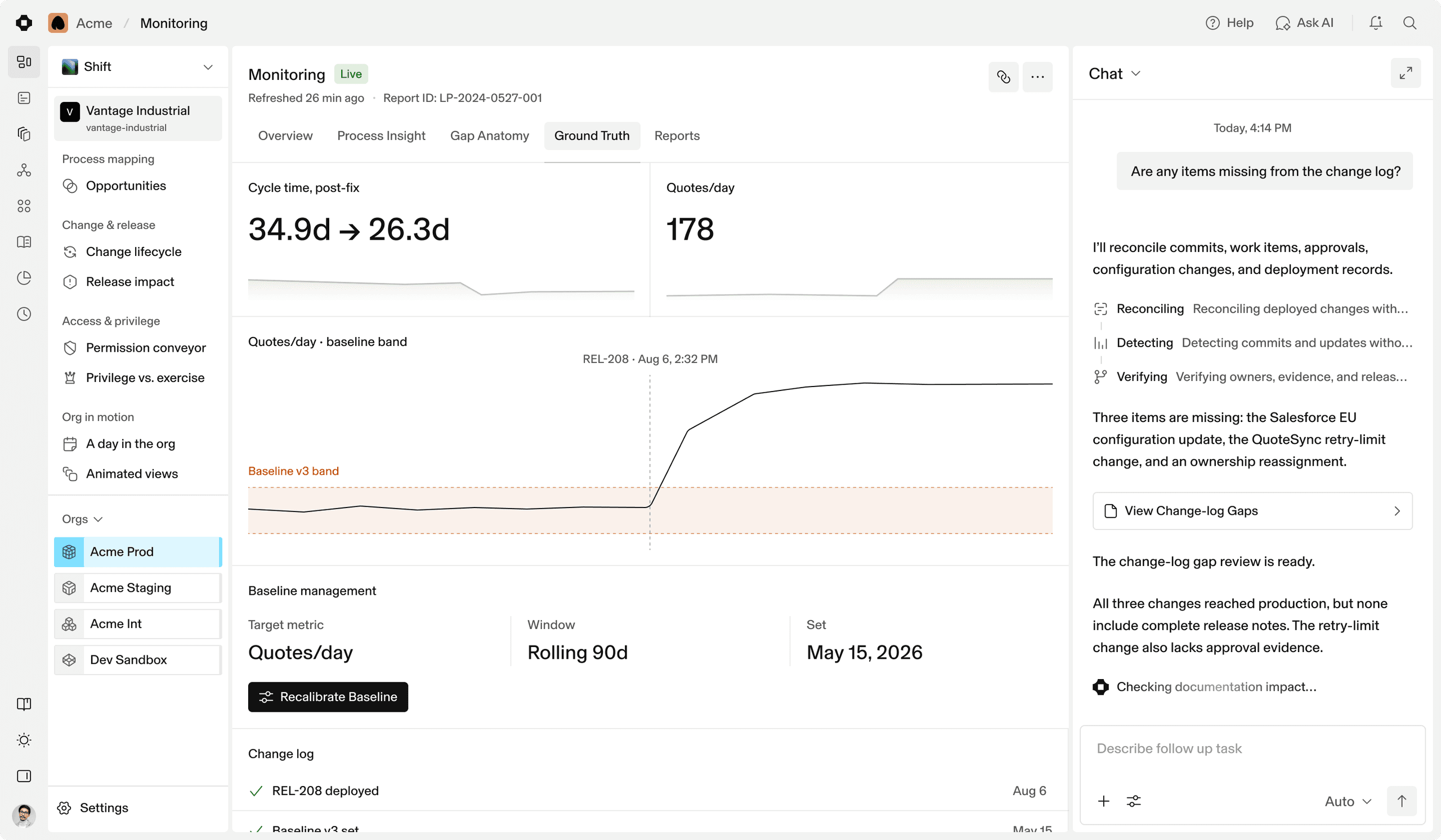
Days lost per case at each stall, counted directly.
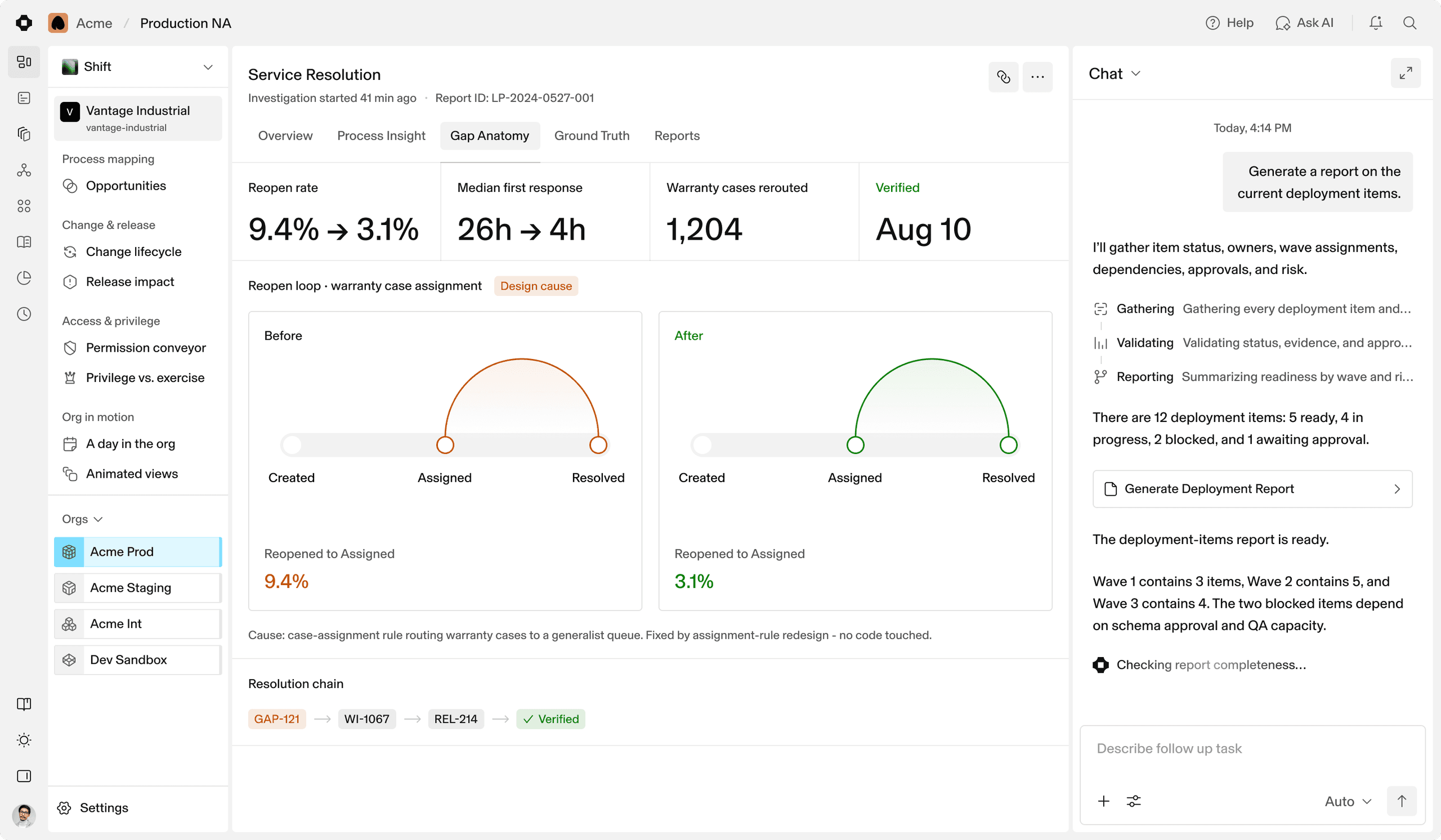
The pairs of stages work bounces between, and how often.
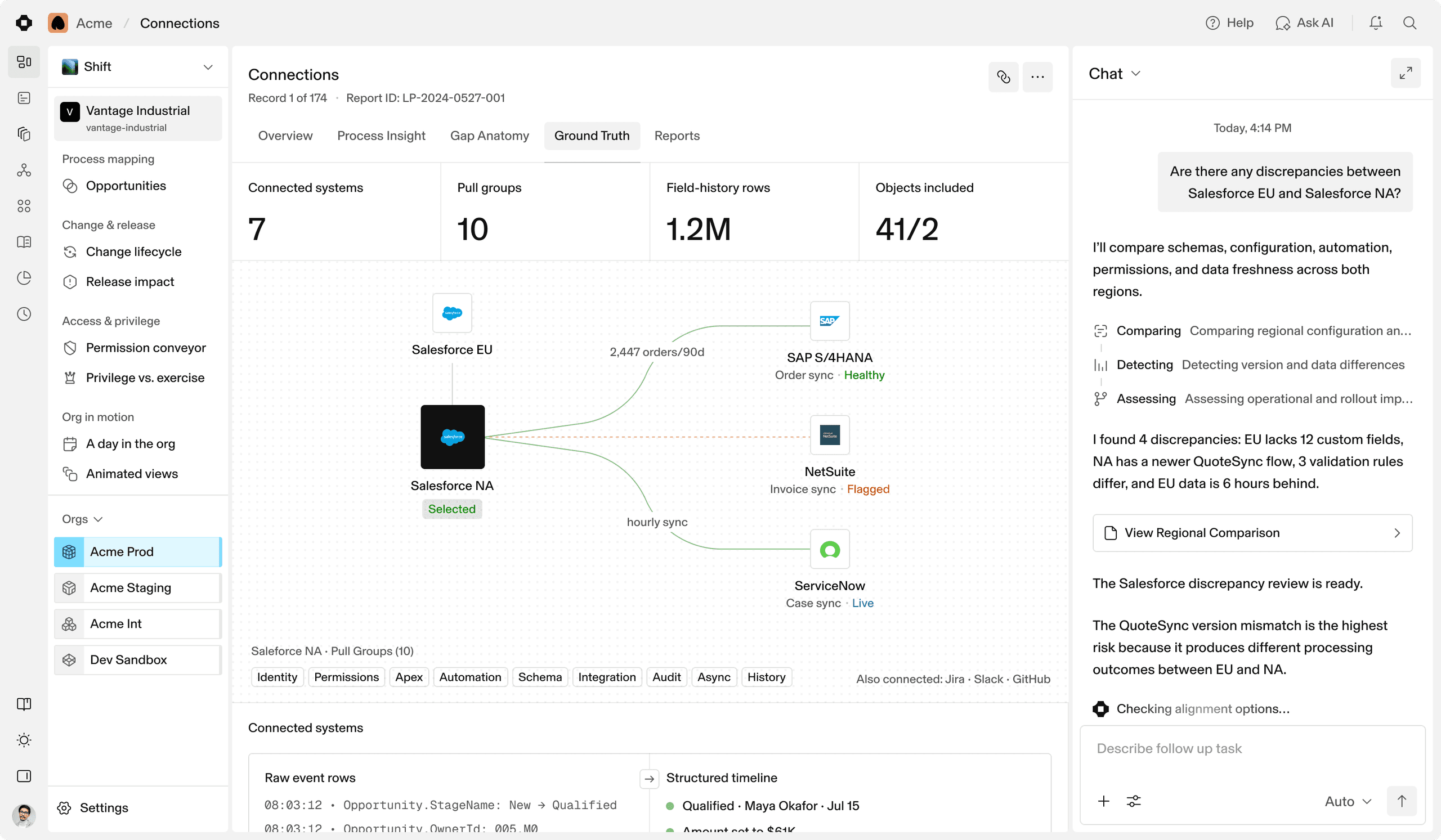
Whether a stall belongs to a stage, team or seam.
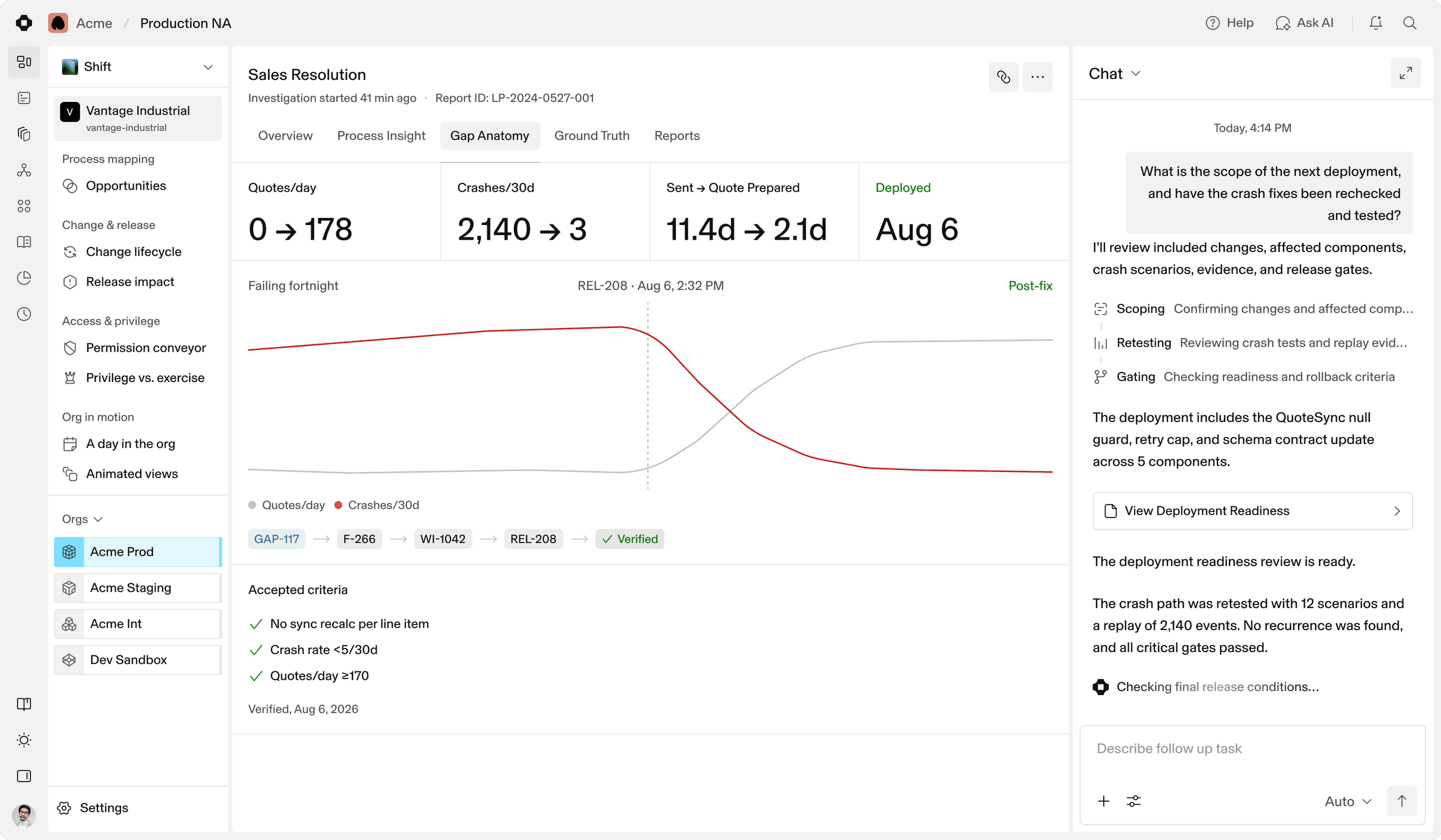
The same map run again after a change ships.
Future state
The map is the baseline for whatever comes next — a fix, a rebuild, or a replatform — so nothing gets designed against a guess.
Future state
The map is the baseline for whatever comes next — a fix, a rebuild, or a replatform — so nothing gets designed against a guess.
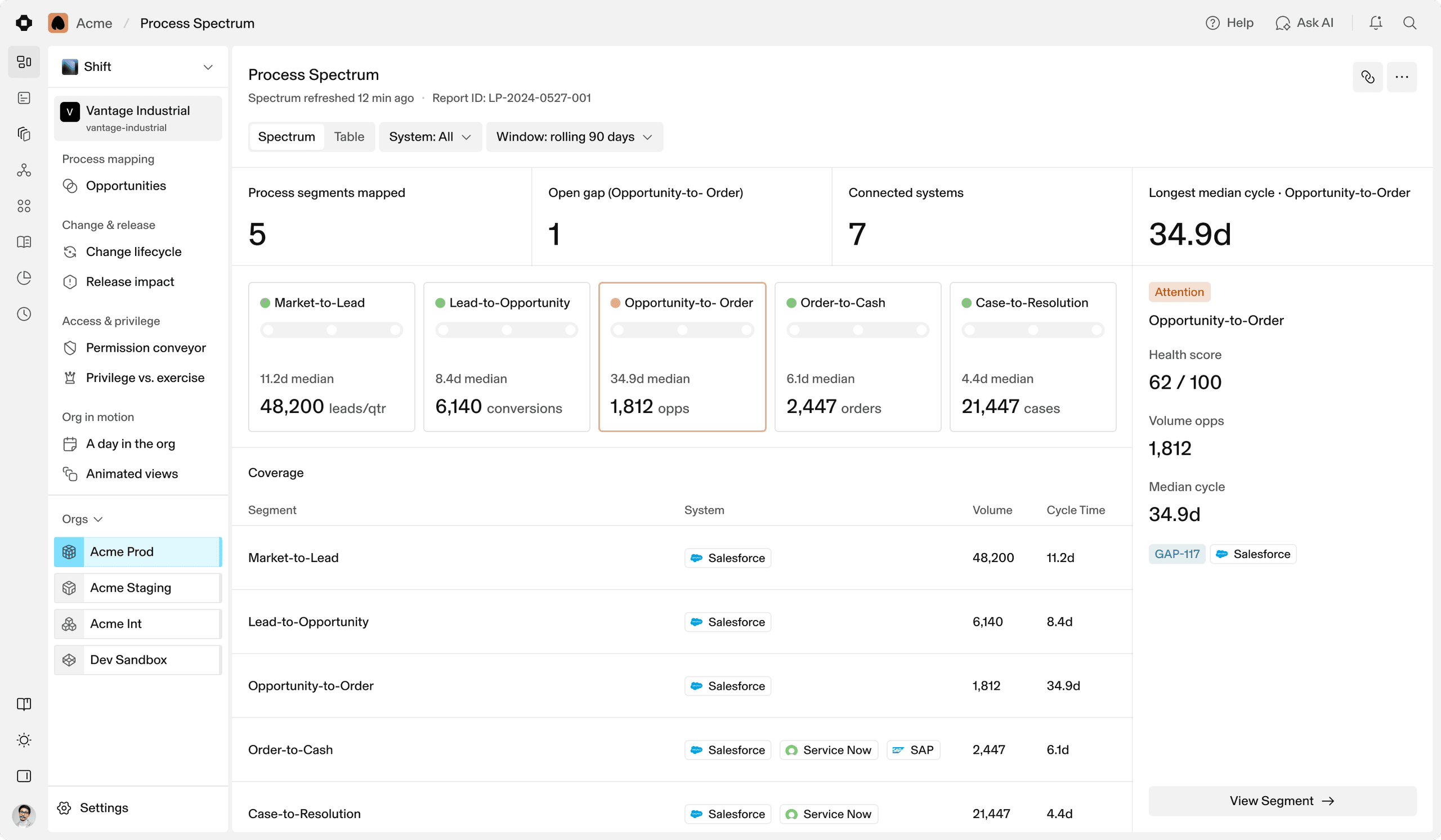
The current process measured, so future state has something real.
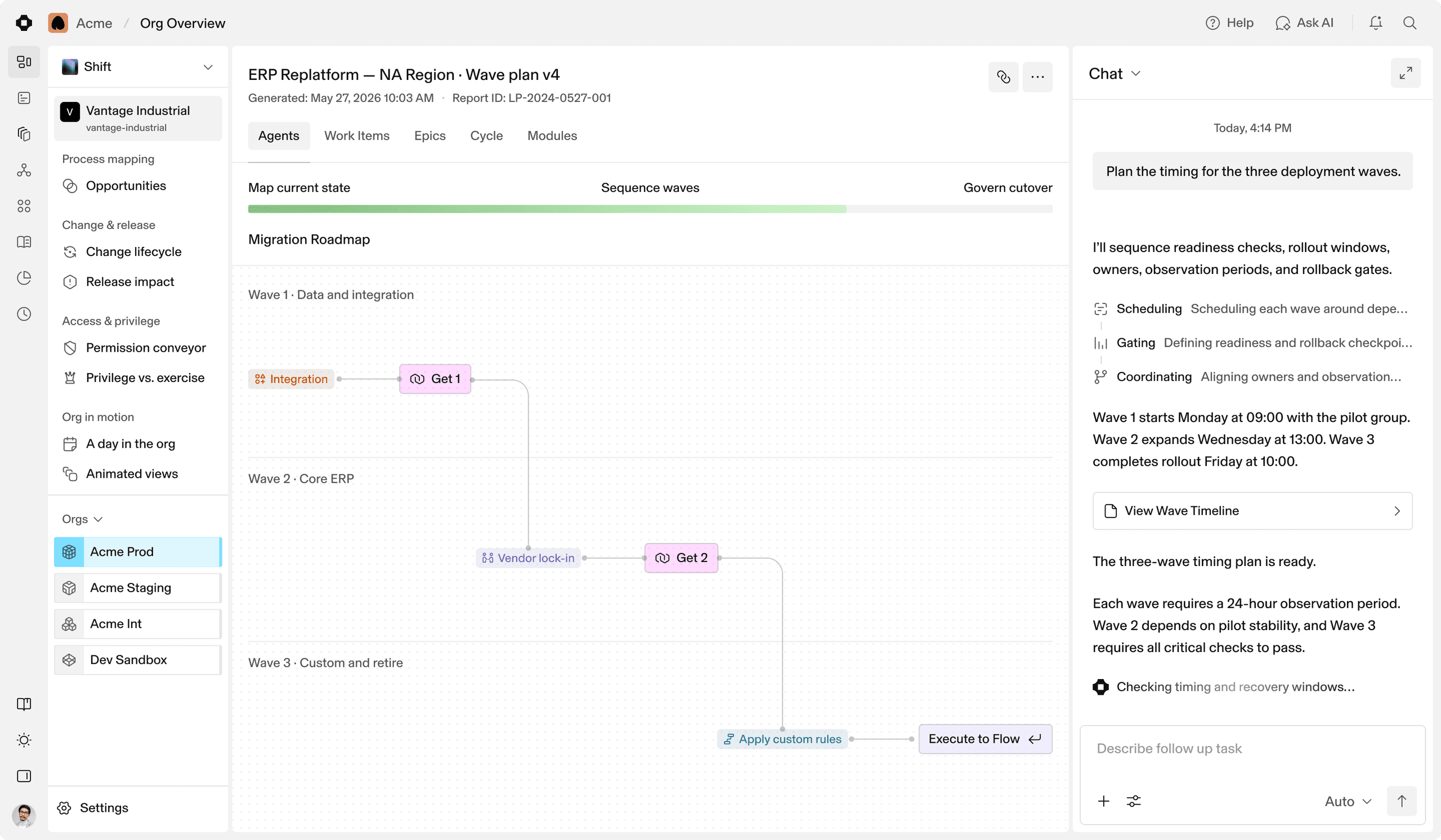
The steps you intend to remove, merge or automate.
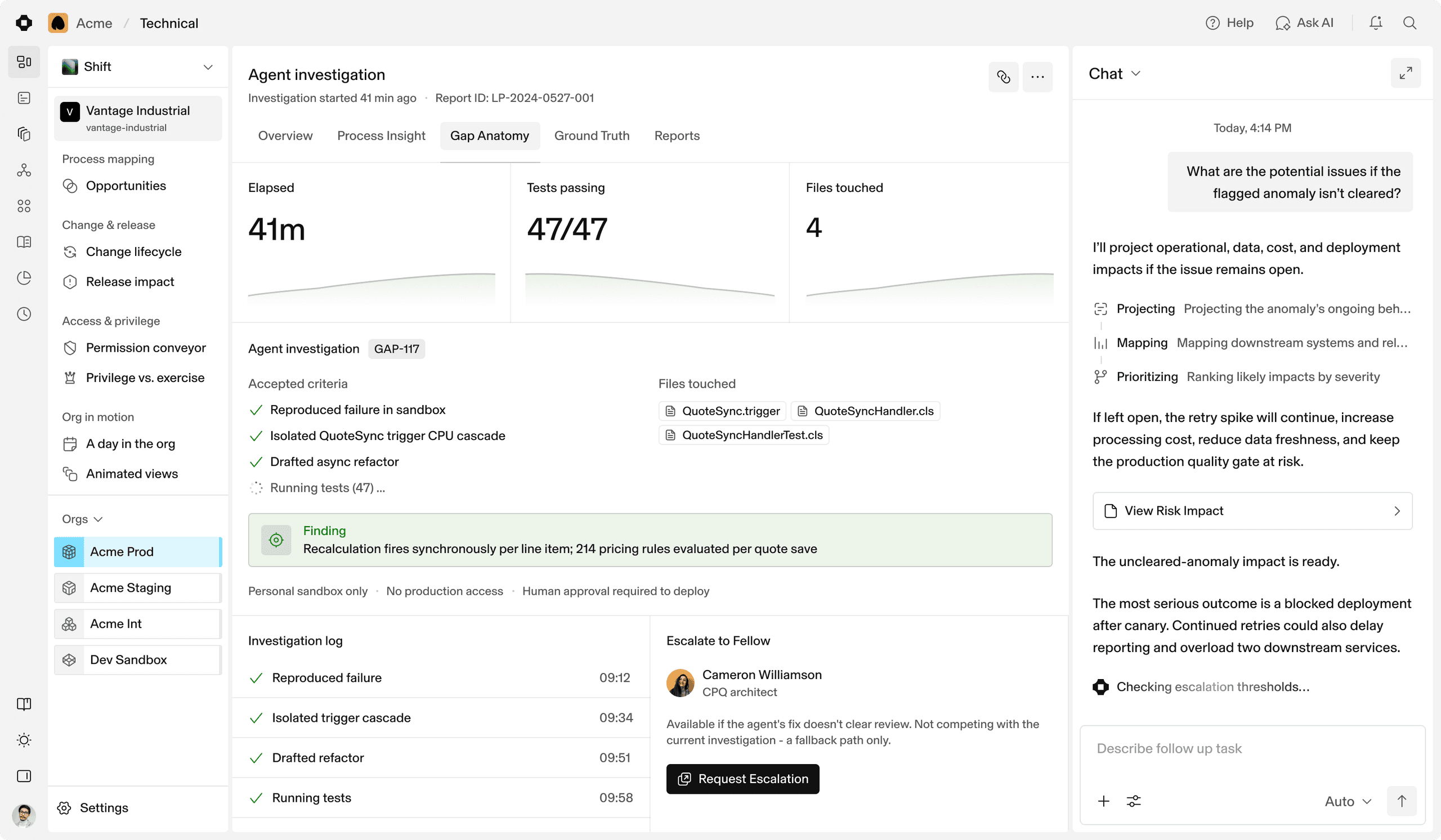
A process finding opens into the triggers and classes beneath.
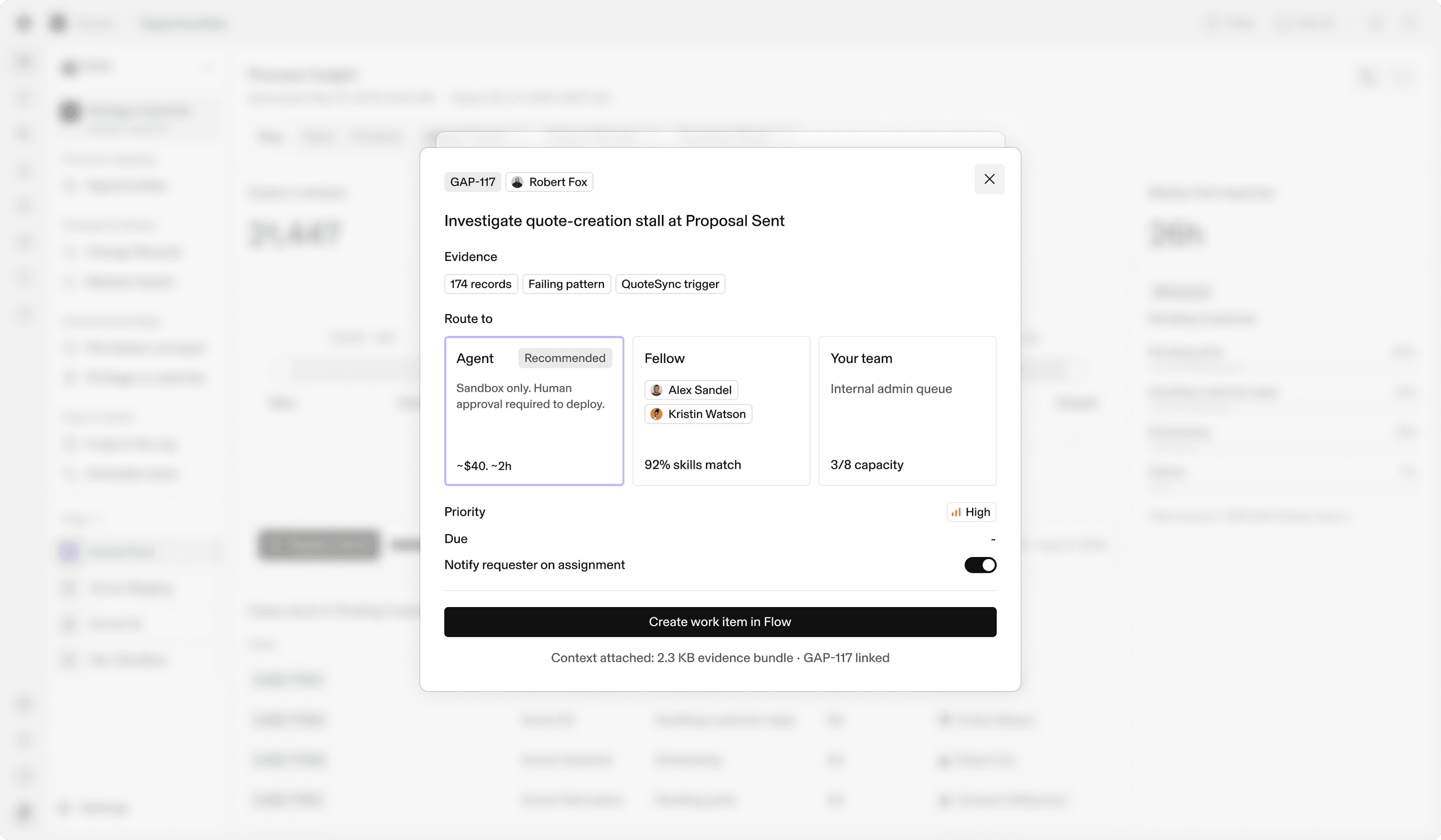
Findings and roadmap items become work items, same platform.
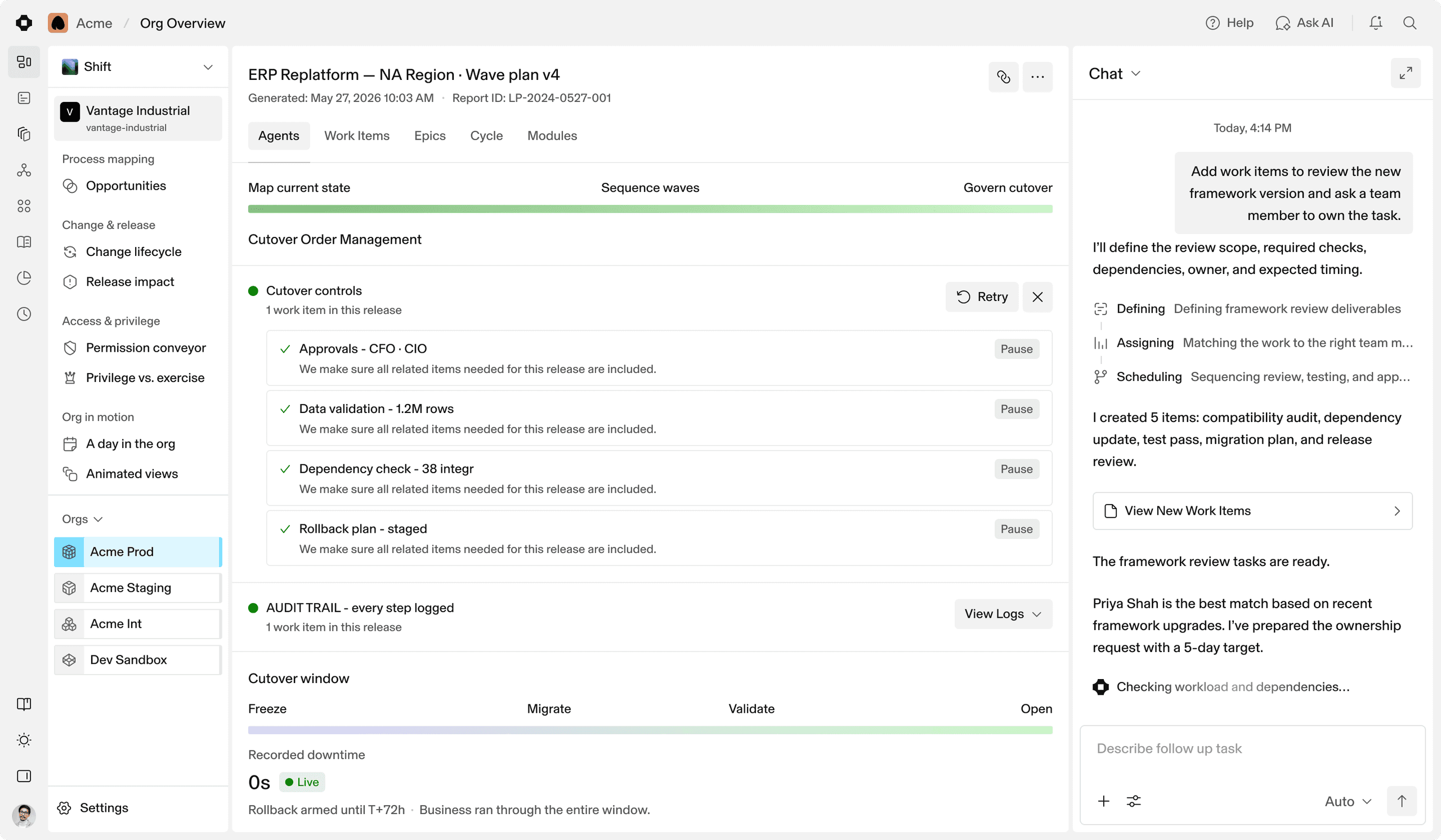
The change starts from what runs. Your systems stay.
Why Shift
Most ways of learning how a process runs either ask people or ask for a data team. Shift asks the system.
We are also working on the process intel. What my process is versus what I think my process is gives us the capability to be proactive around what is going on with the system.
They came in and within two weeks had diagnosed about a dozen areas of our CPQ and contracting flow that they could come in and fix. We executed against a roadmap that corrected our entire contracting flow, beginning to end. They were phenomenal.
It allows us to ship faster, react to the marketplace, have flexibility. Laminar does a pretty good job at pointing to the resources that are impacting whatever might be the problem that you're trying to solve.
Where Shift fits
Shift finds what the business actually does. Profile finds what the system actually is, Flow builds the fix and keeps it running, and Ascent holds every change to the same rules.