
Ascent
Ascent is the gate every change clears — static analysis, approvals, and an audit record written with the change, not after it. It runs under all three engines, so process findings, technical findings, and delivery work answer to the same rules.
100+ enterprise teams trust Laminar with the systems that run their business.


Governance
Most audit trails are assembled when someone asks, from tickets, emails, and memory. By then the person who made the change has moved on, and the record is a reconstruction.
How Ascent works
Approvals, gates, and deployments are recorded in the same transaction as the change itself, in append-only stores. When someone asks who changed what and why, the answer already exists.
Approval gates
Every deploy waits on an approval, and every approval is recorded with the change.
Approval gates
Every deploy waits on an approval, and every approval is recorded with the change.

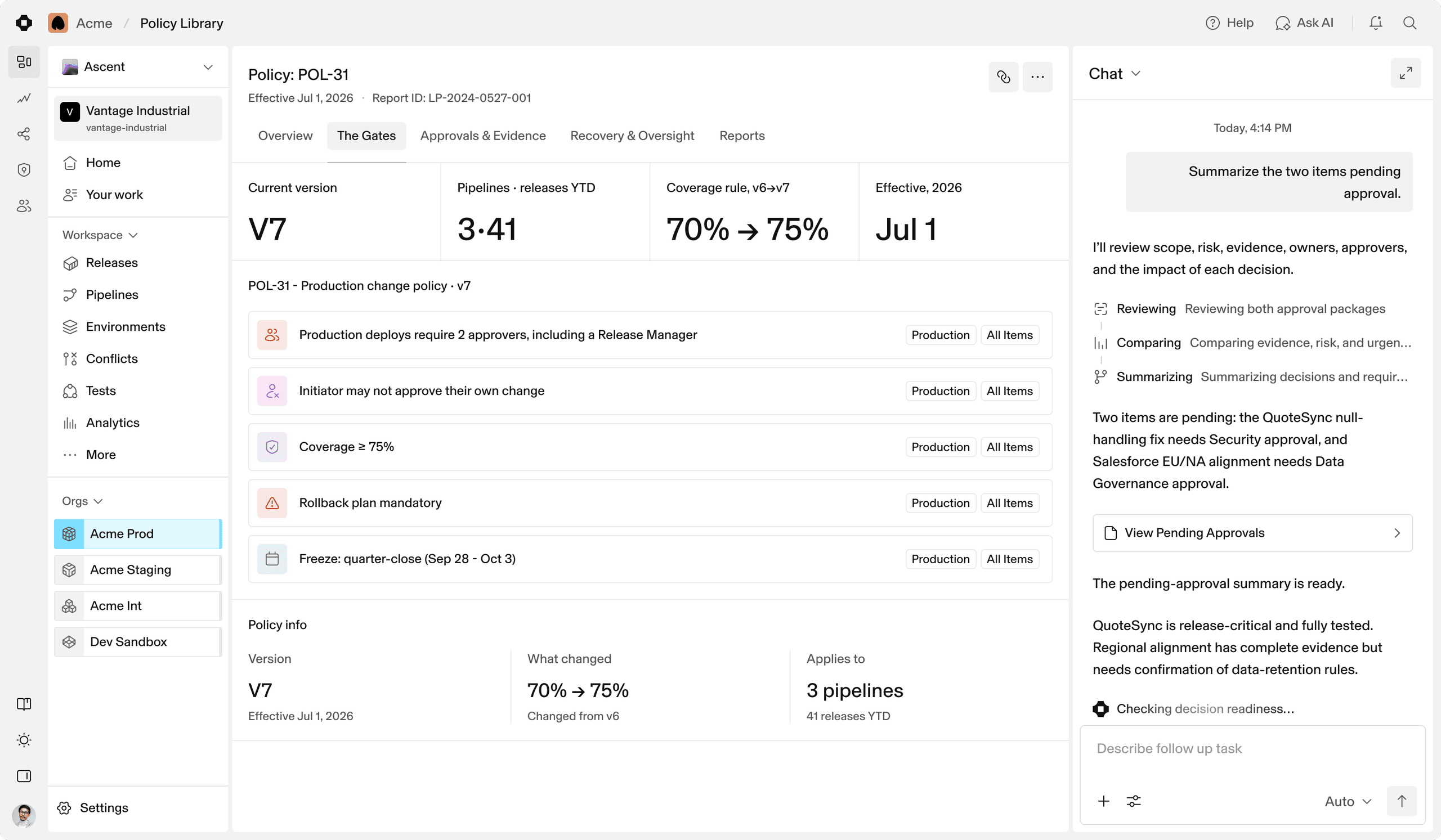
A person approves, not a role. The record says who.
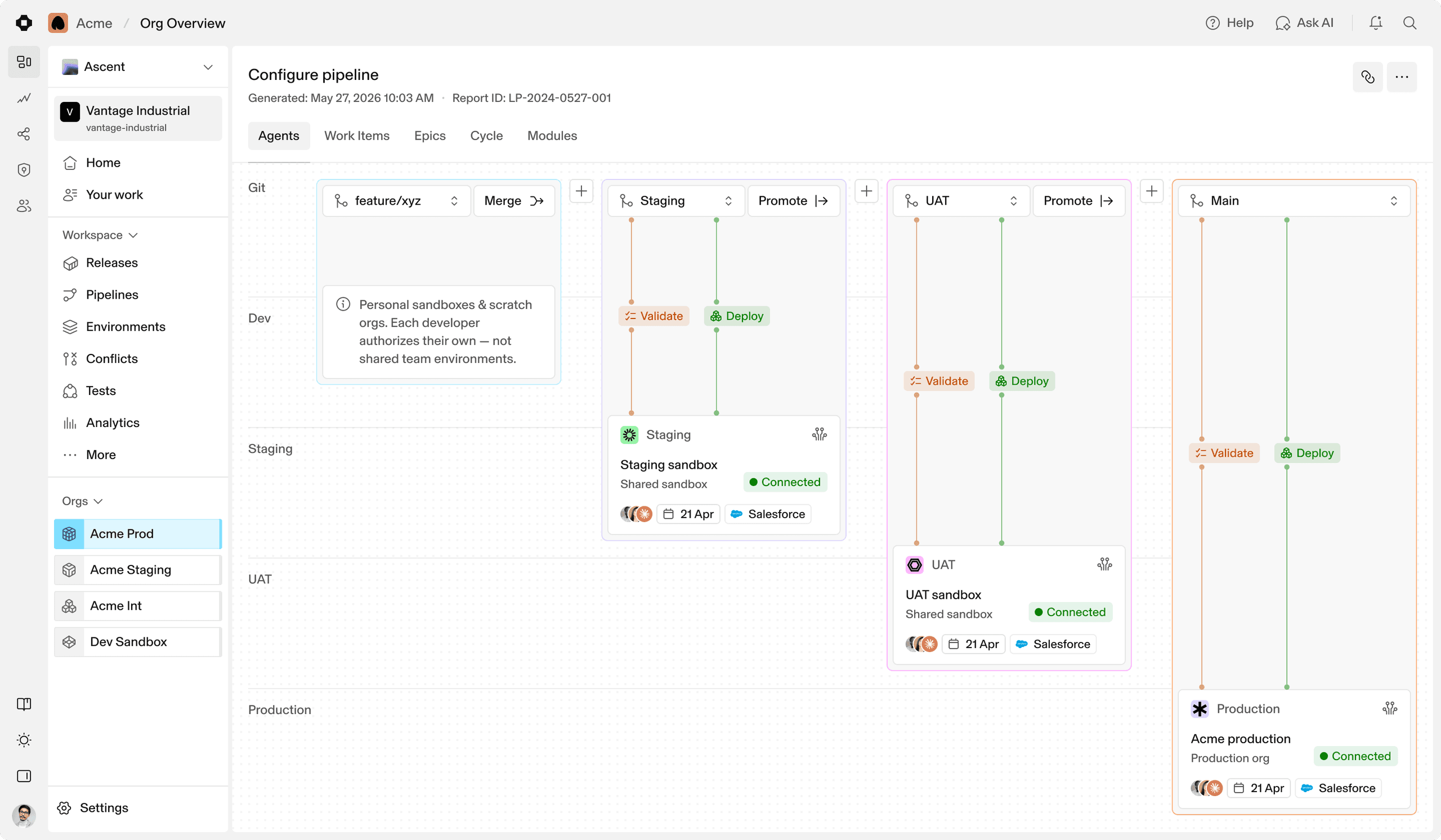
Validation, then approval, then deployment. In that order, every time.
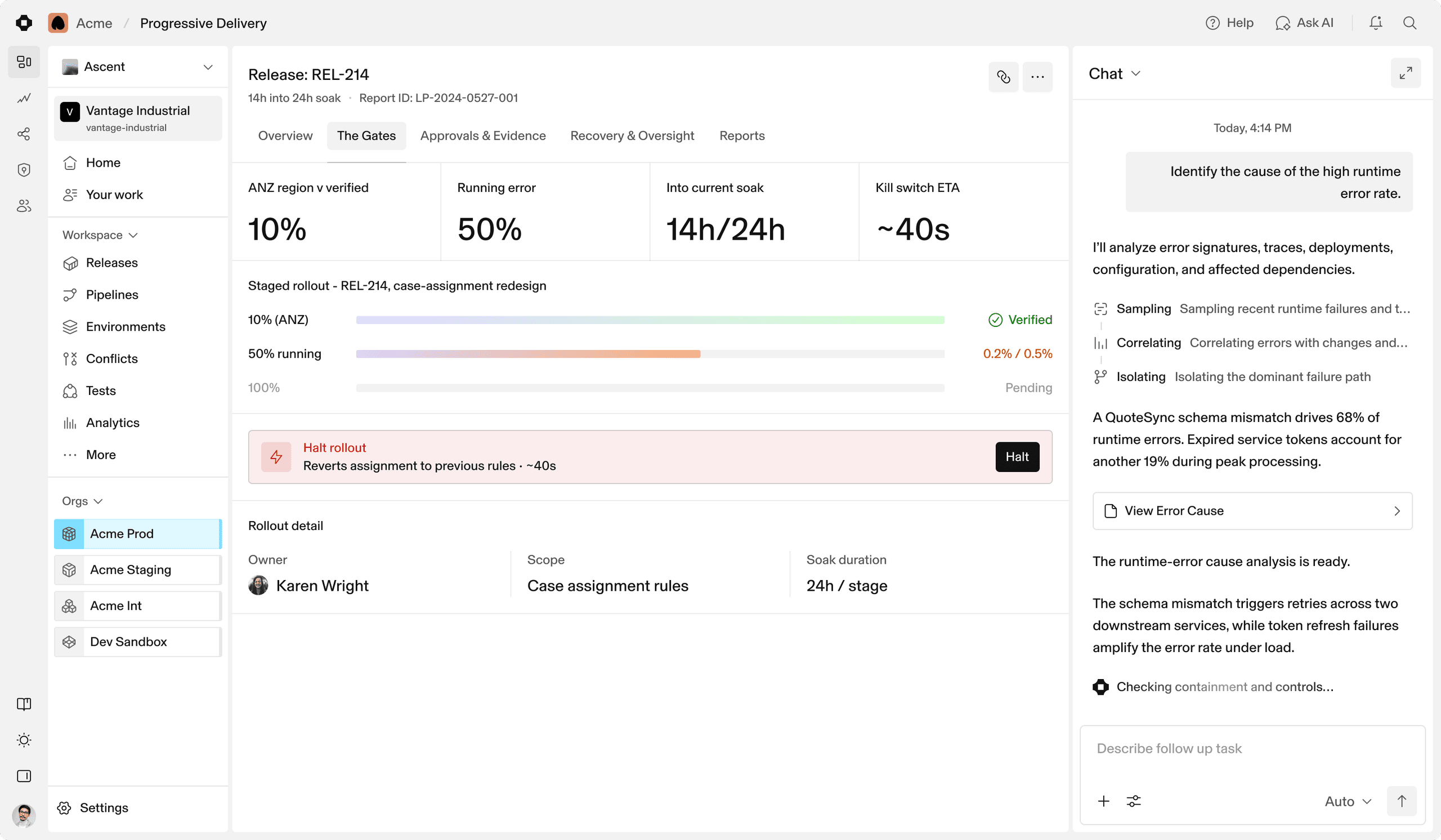
When the error rate climbs, the rollout halts itself.
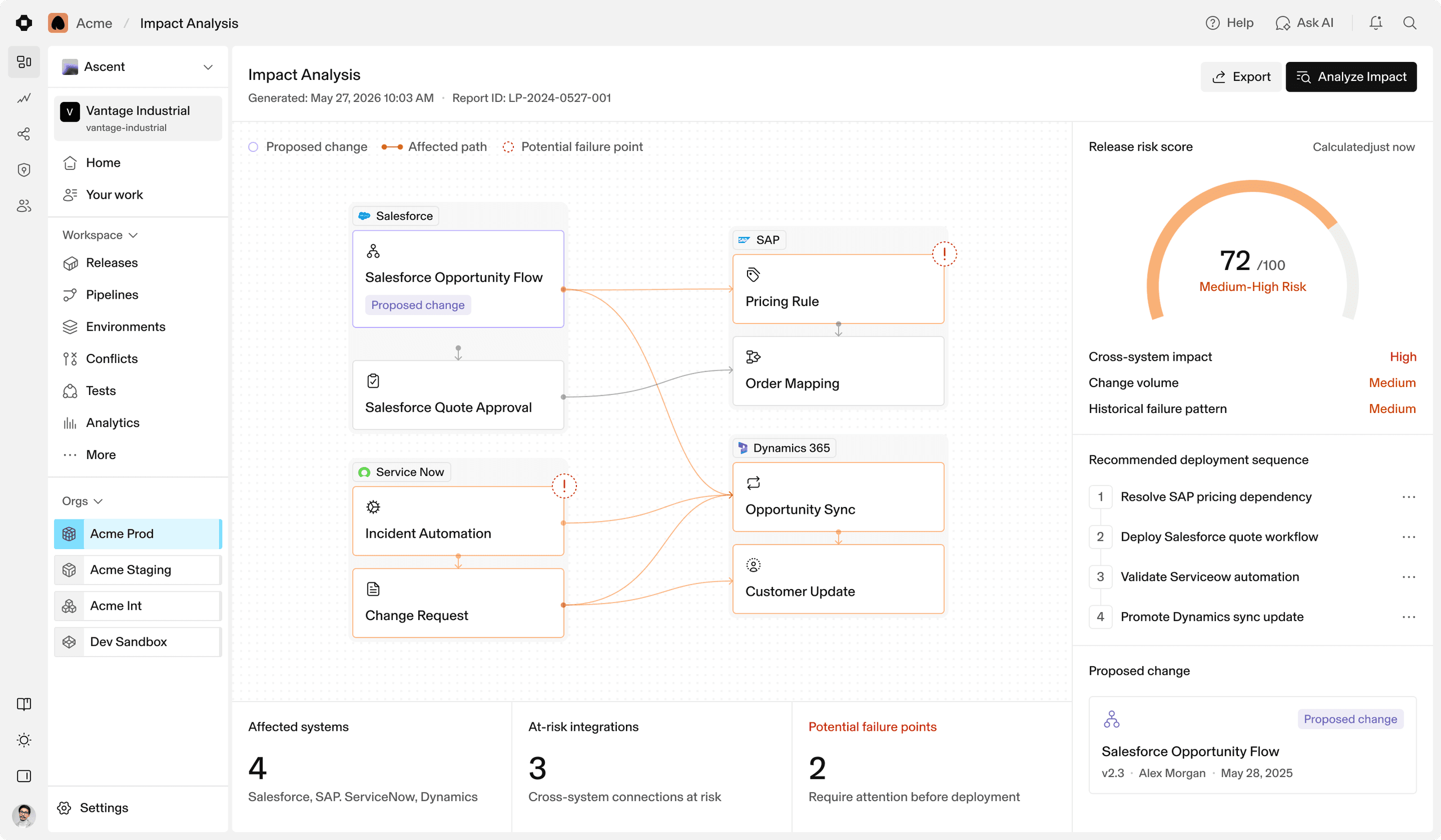
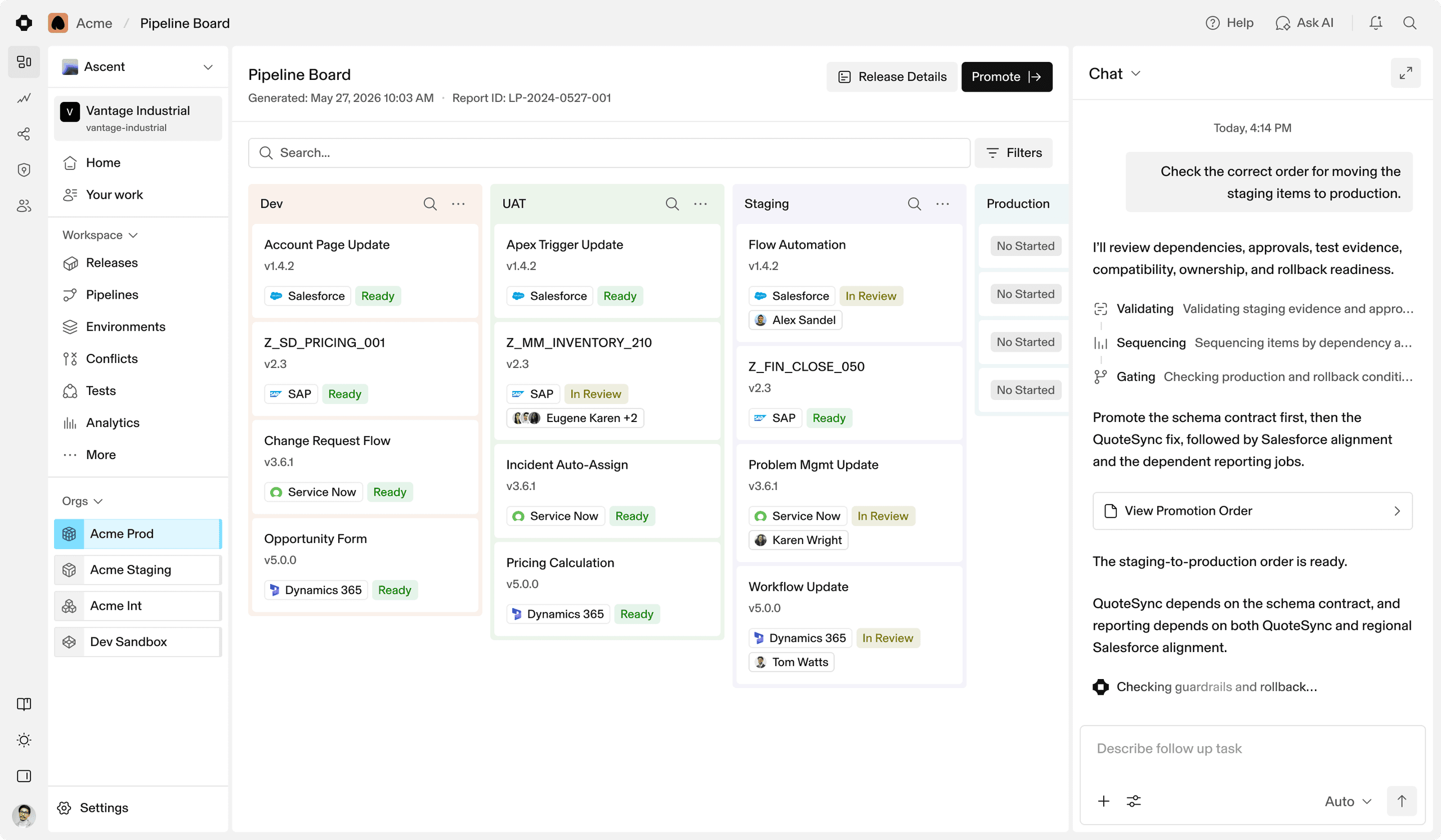
Cross-system impact and a risk score, computed before any promotion.
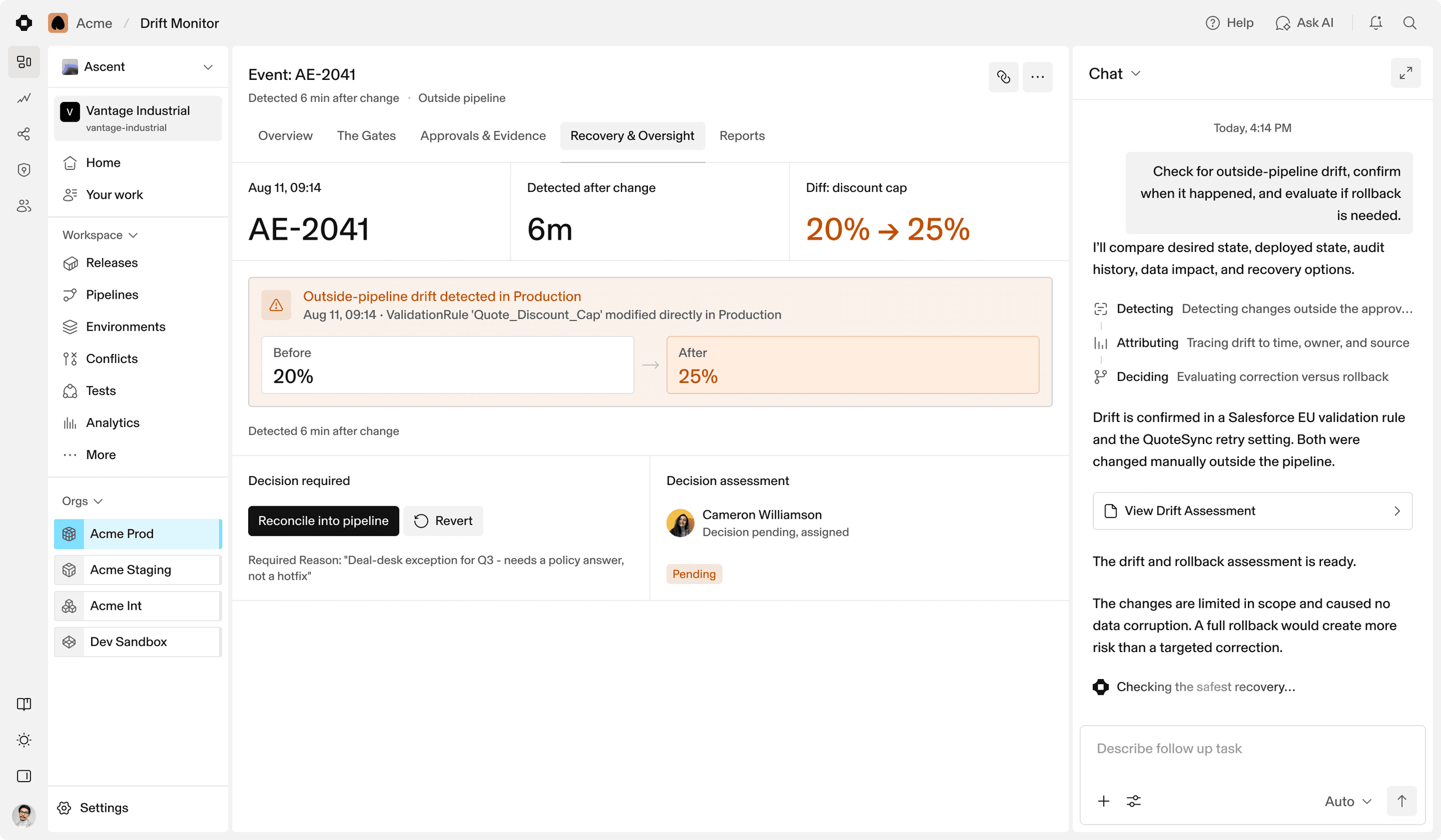
For the rare case: single use, recorded, never reusable.
Audit record
Who changed what, when, under whose approval, against which org. Recorded as it happened.
Audit record
Who changed what, when, under whose approval, against which org. Recorded as it happened.
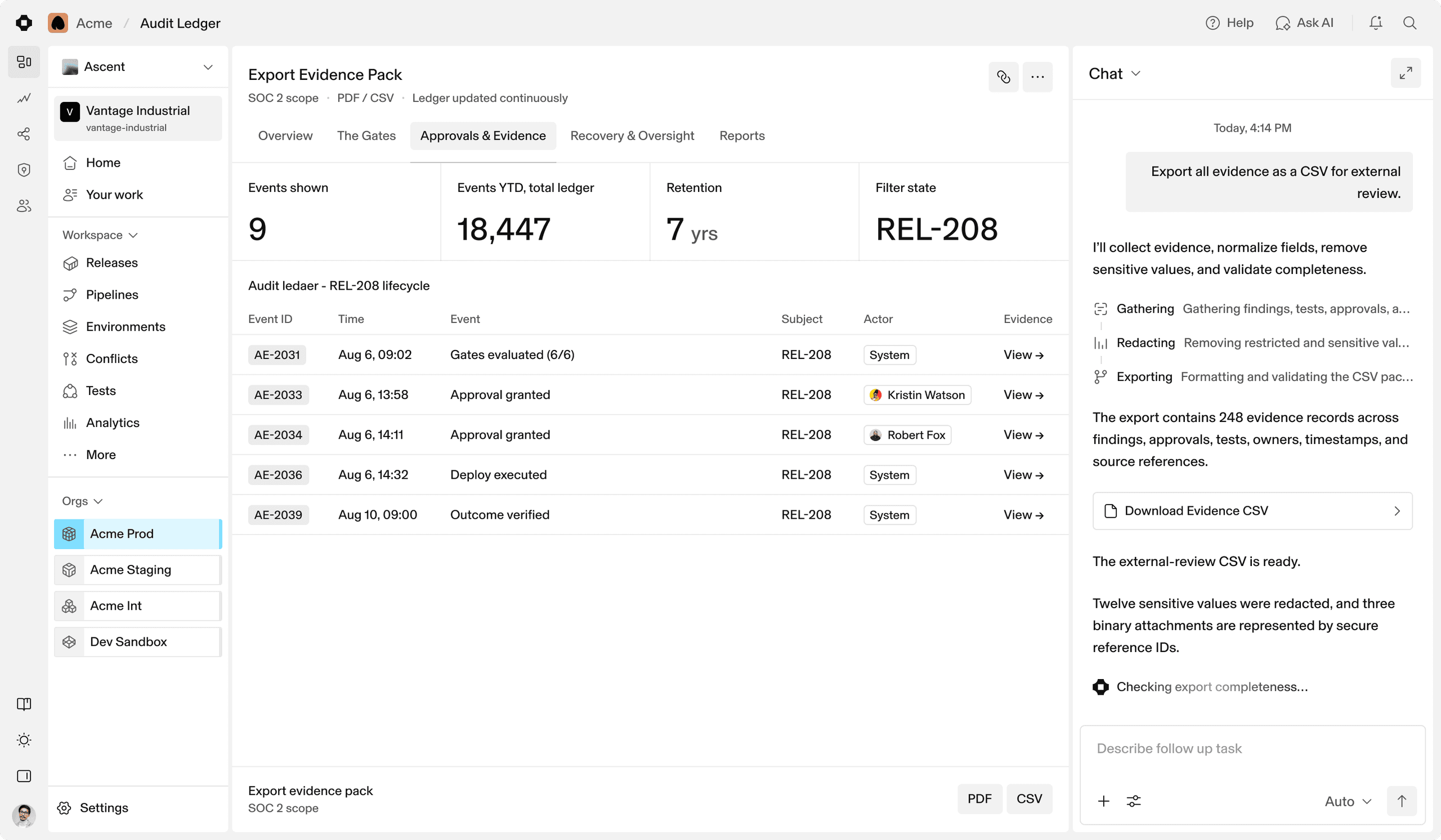
Transactional stores, nothing edited afterwards, held for seven years.
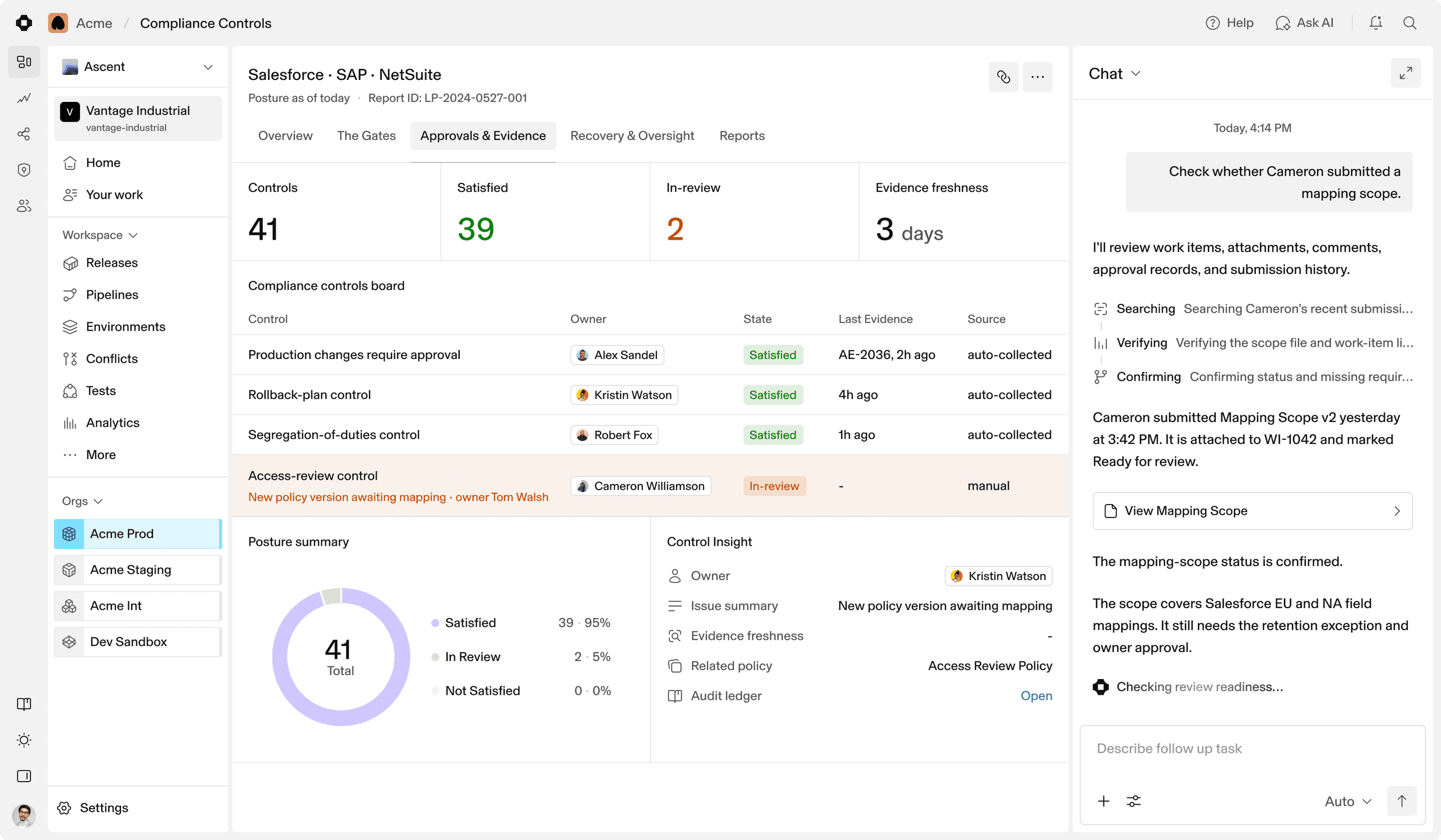
Approval, check and deployment land in the same transaction.
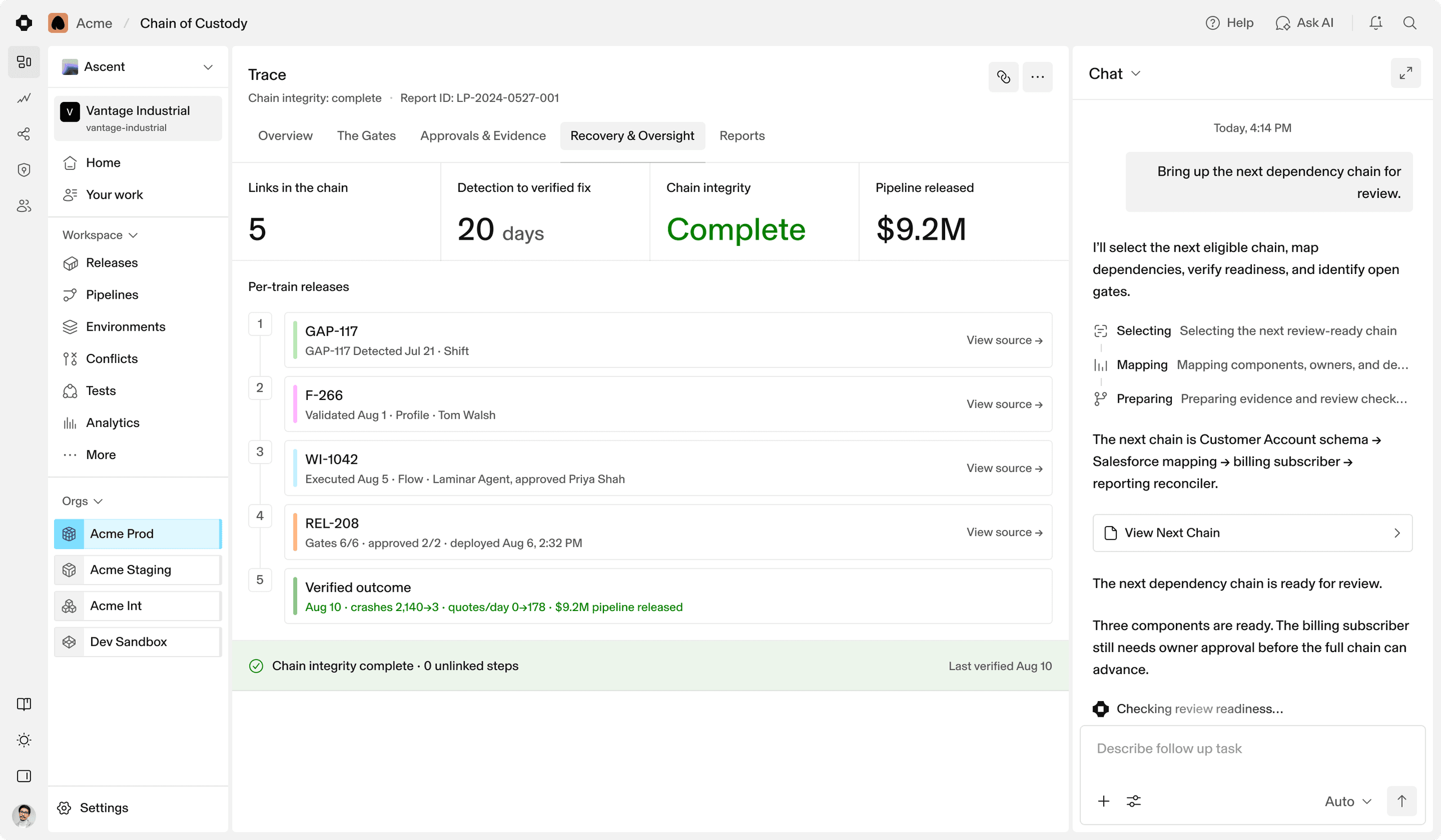
Work item to production, and from production back again.
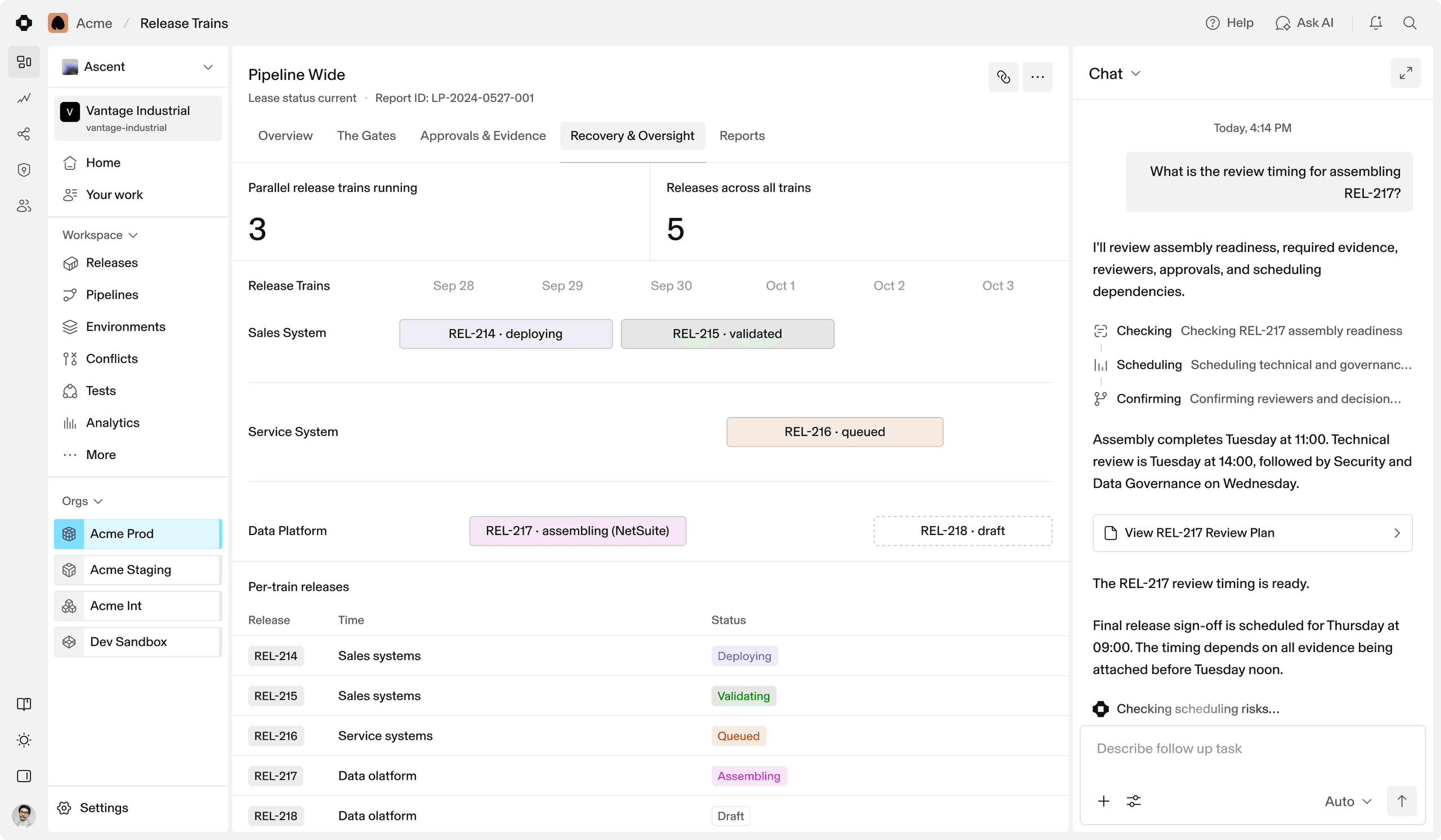
Every release pinned to a SHA that cannot move.
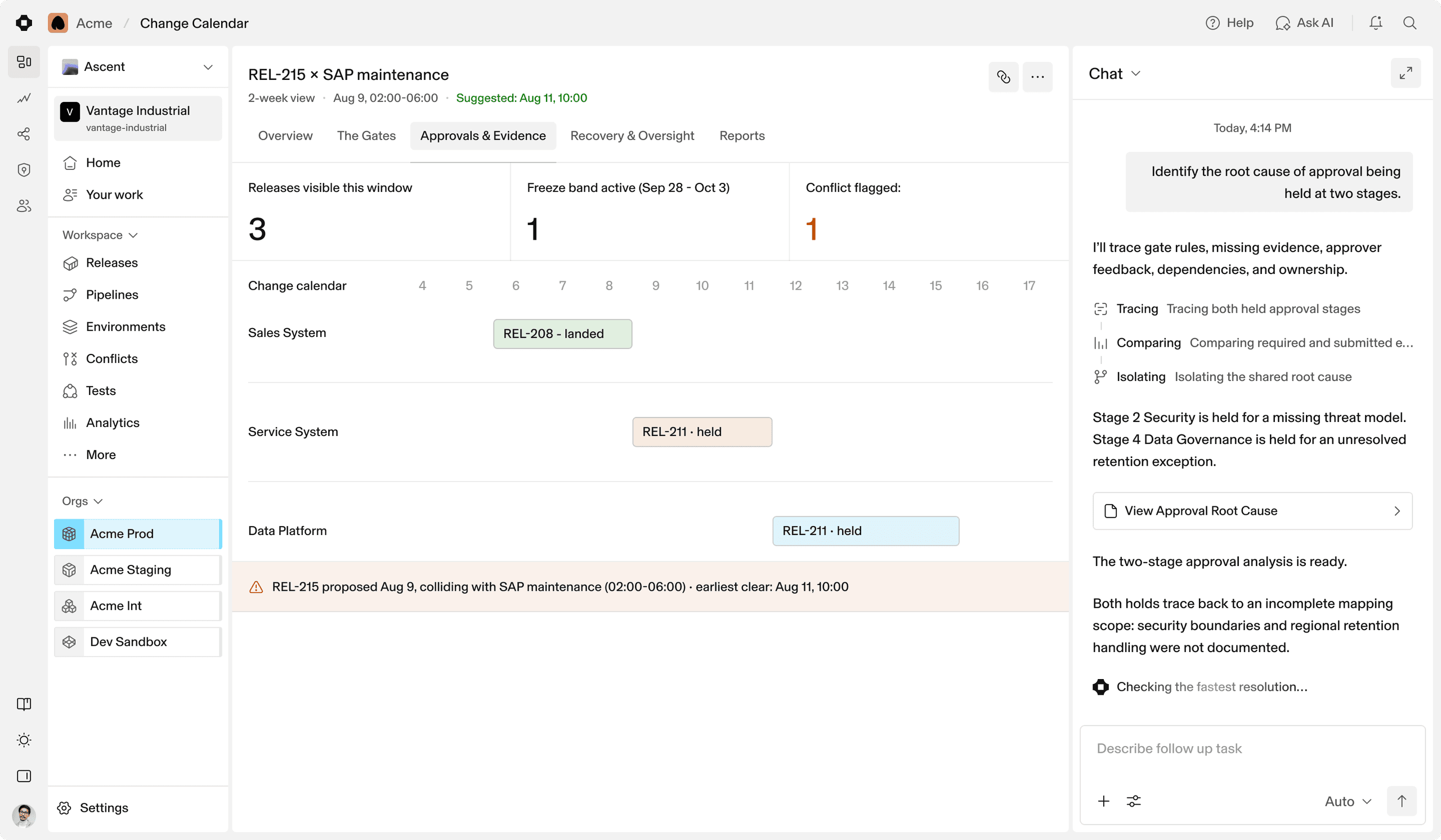
Releases, freeze bands and maintenance windows, with conflicts flagged.
Under every engine
Ascent isn't a fourth step. It runs beneath the other three.
Under every engine
Ascent isn't a fourth step. It runs beneath the other three.
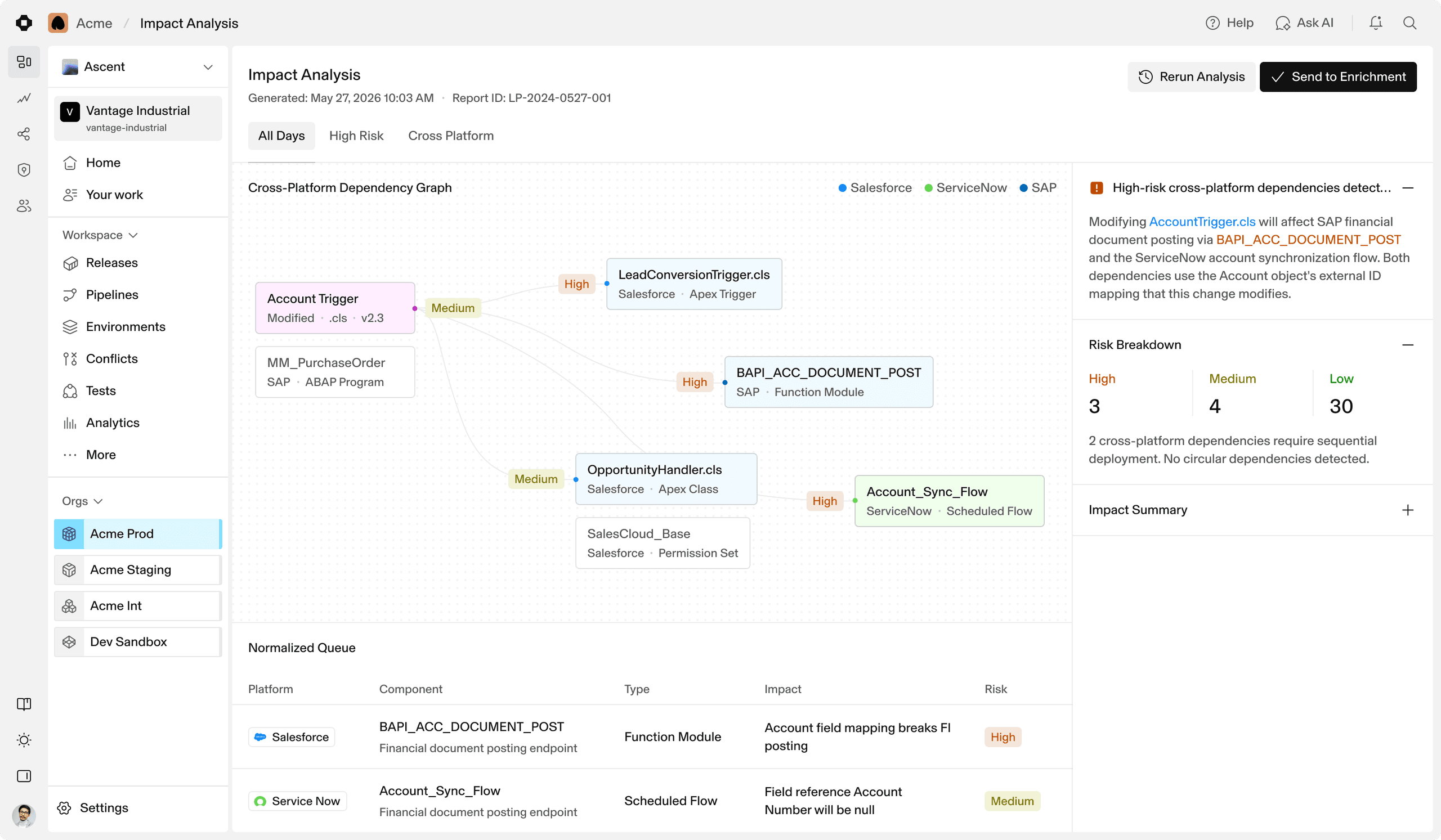
Salesforce, SAP, ServiceNow and Dynamics in one dependency graph.
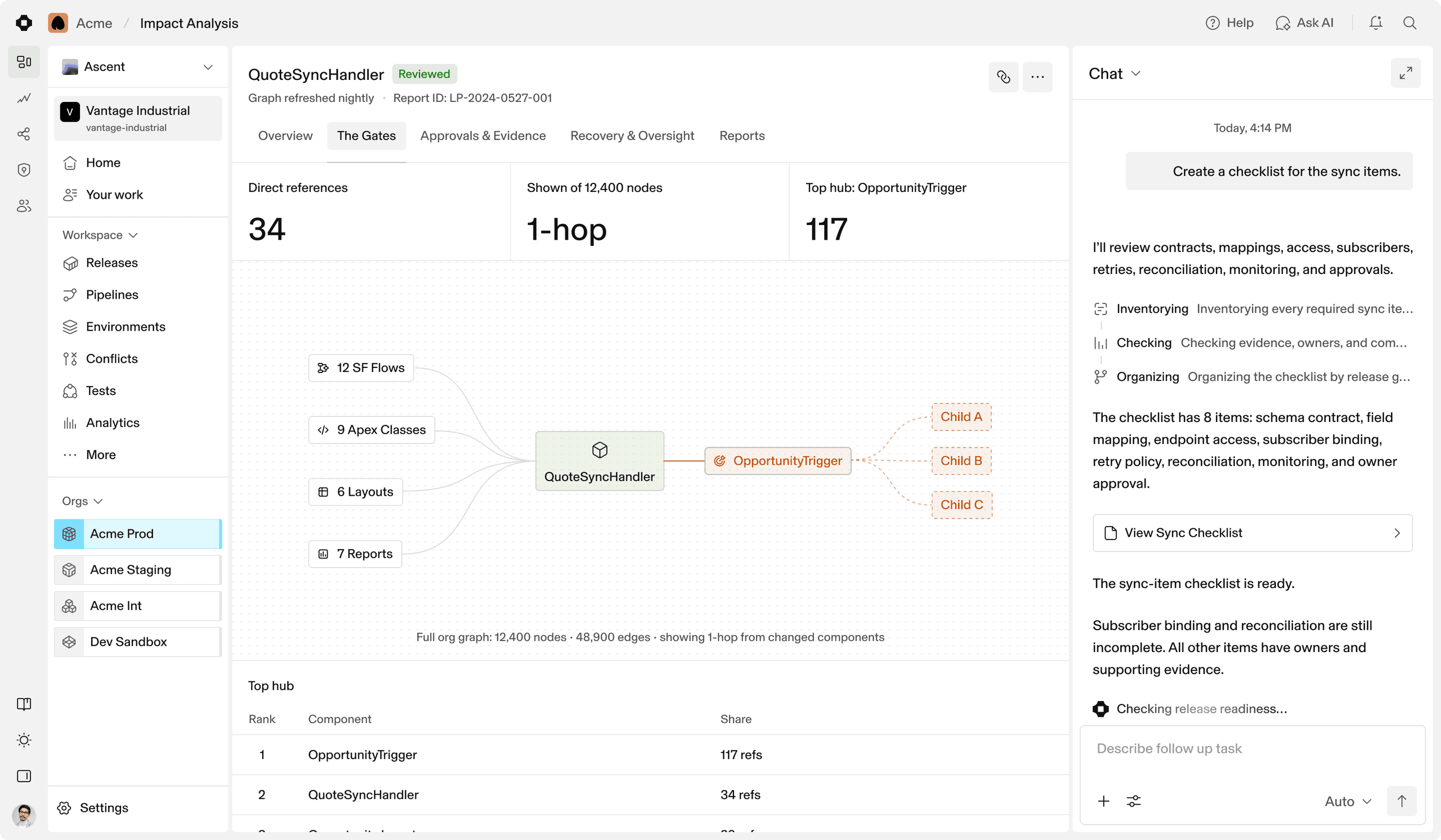
Every finding carries evidence, and every profile stays immutable.
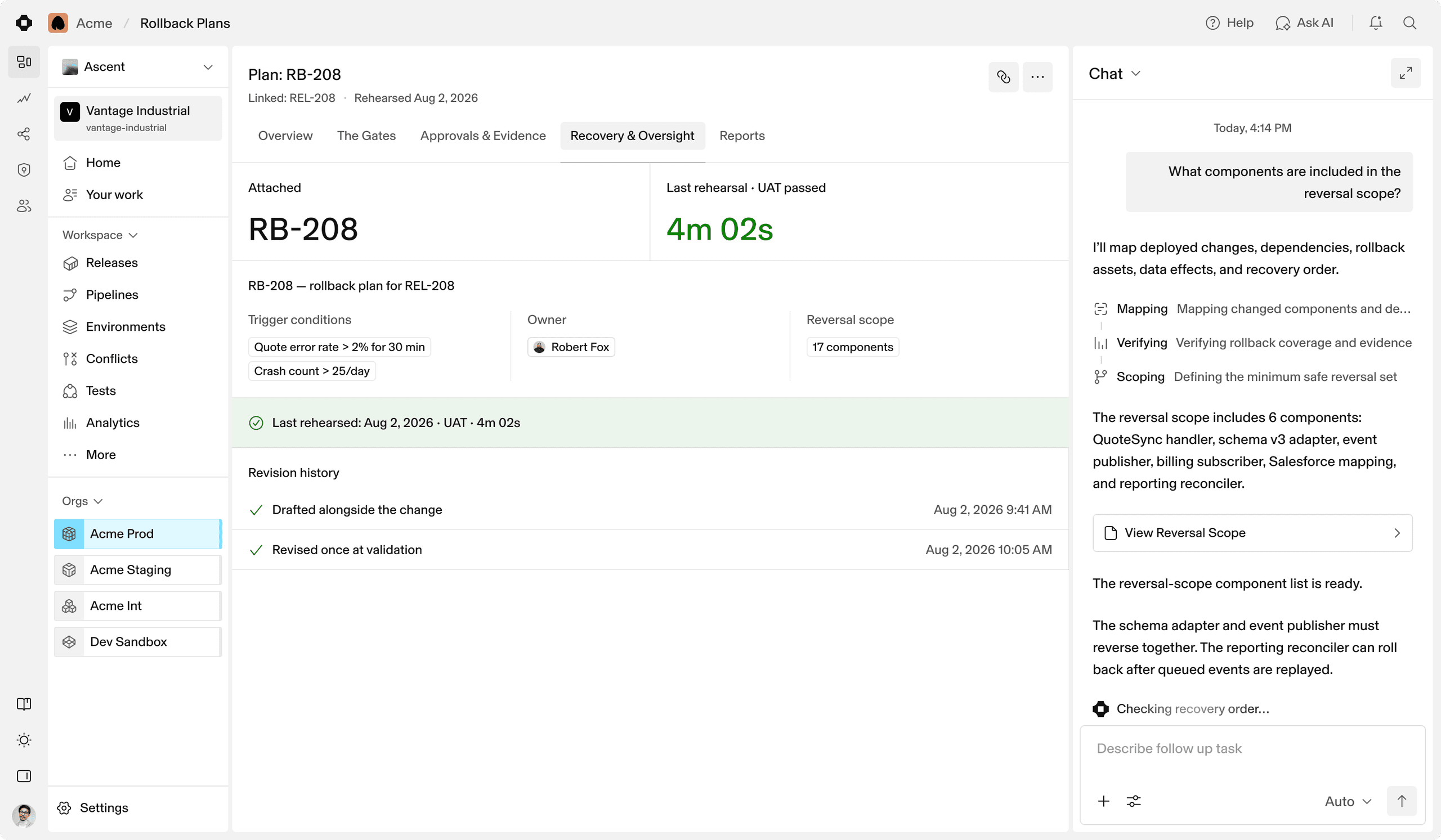
Trigger conditions and a reversal scope, rehearsed before shipping.
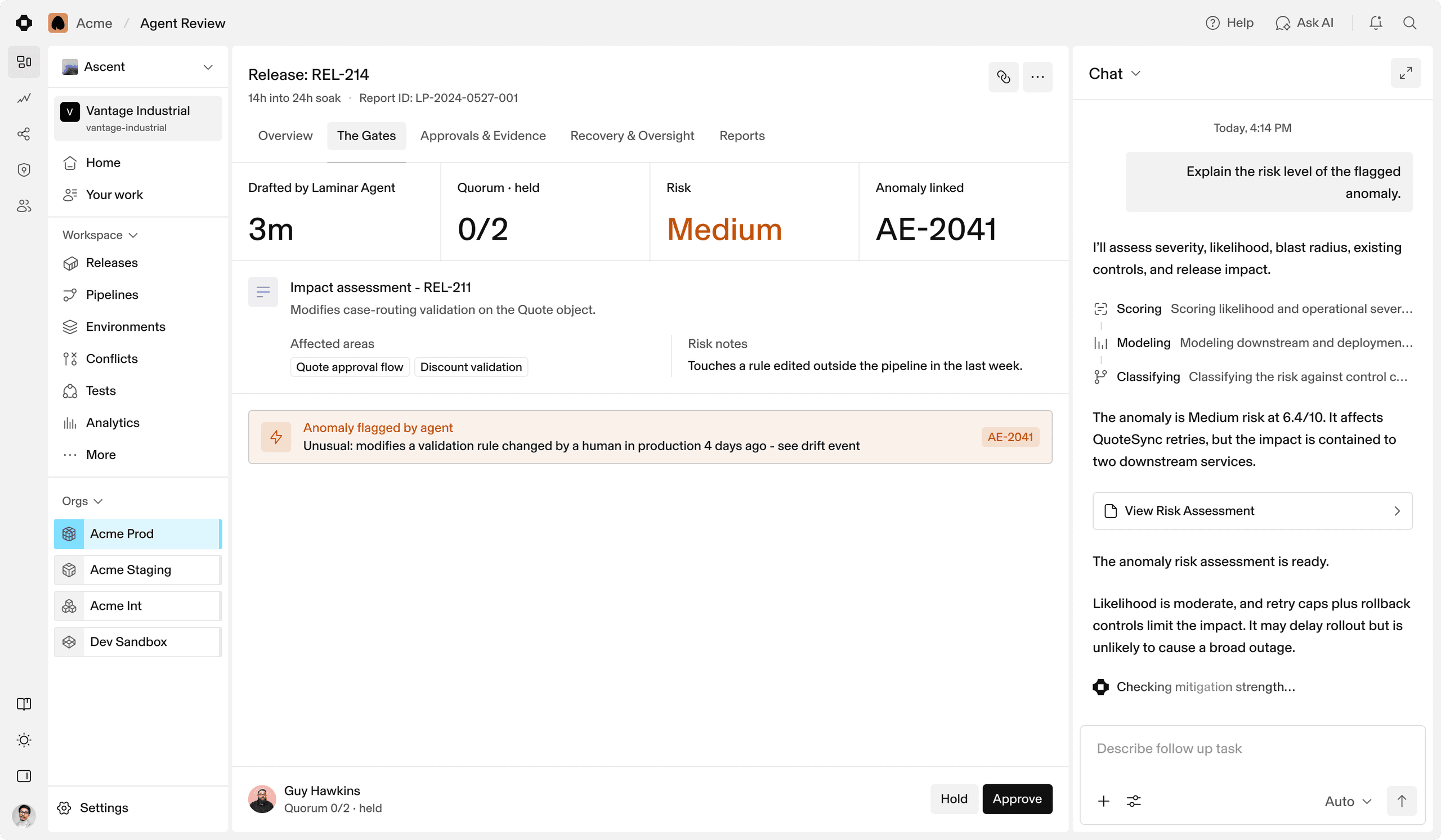
An agent's draft clears the same approval a person's does.
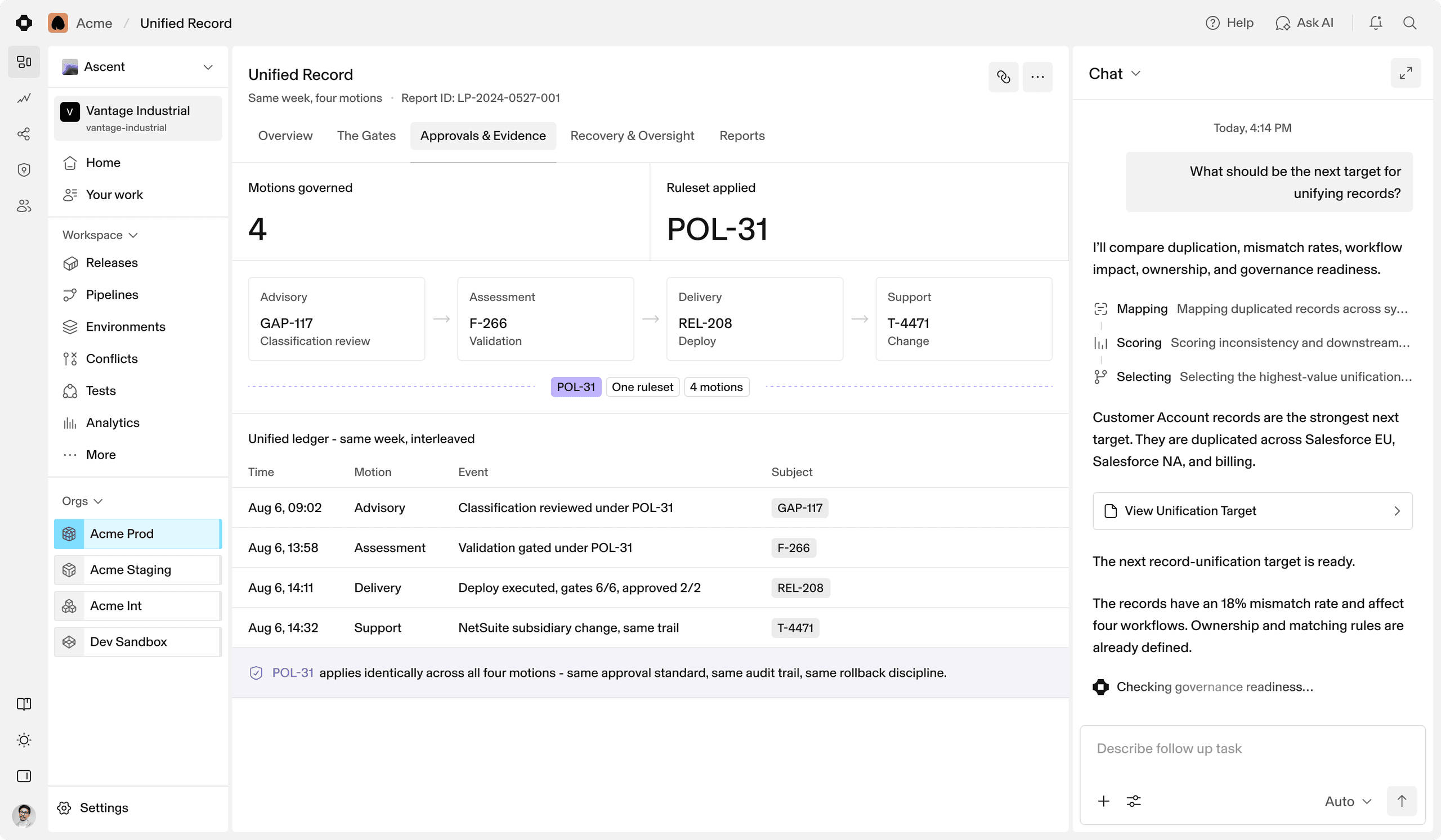
One ruleset applied identically across all four motions, by mechanism.
Governance either arrives as a review step someone can skip, or it's the path the work takes. Ascent is the second kind.
We are sometimes stretched thin. If you're in that spot, Laminar is your friend. I am facing this challenge of auditability, governance, and all. Given how much we are democratizing, I know there will be exposures that we'll not be able to focus on.
Most of the customers that we know are afraid to change anything for fear that they break this fragile web of interconnectedness between their enterprise apps. What Laminar is offering is a rapid, governed means to become an agile enterprise, at a price that they can actually afford.
What should a CIO demand of delivery partners today? Much higher speed, lower cost, and the output that you can live with for ten years. That ultimately enables the company to maintain agile change, not just at go-live, but for the life of the program.
Where Ascent fits
Shift reads the process, Profile reads the org, and Flow does the work. Ascent is why all three produce the same record.