
Flow
Flow is where the work gets done — releases, diffs, sandboxes, deployments computed against the live org, every change traceable to the work item and the person who made it. The team that built it supports it, so nothing gets handed to a stranger.
100+ enterprise teams trust Laminar with the systems that run their business.


Implementation
The SI model is paid by the hour, staffed junior, and scoped to a milestone, so nobody on the account is responsible for what happens next. Knowledge stays tribal, documentation never gets written, and the next change is made by someone who wasn't there.
How Flow works
Work comes in as a request, a finding from Profile, or a roadmap item, and leaves as a deployment computed against the live org — checked, approved, recorded. An agent drafts the change in an isolated sandbox on the work item's own branch; a person reviews it and closes the loop.
Work intake
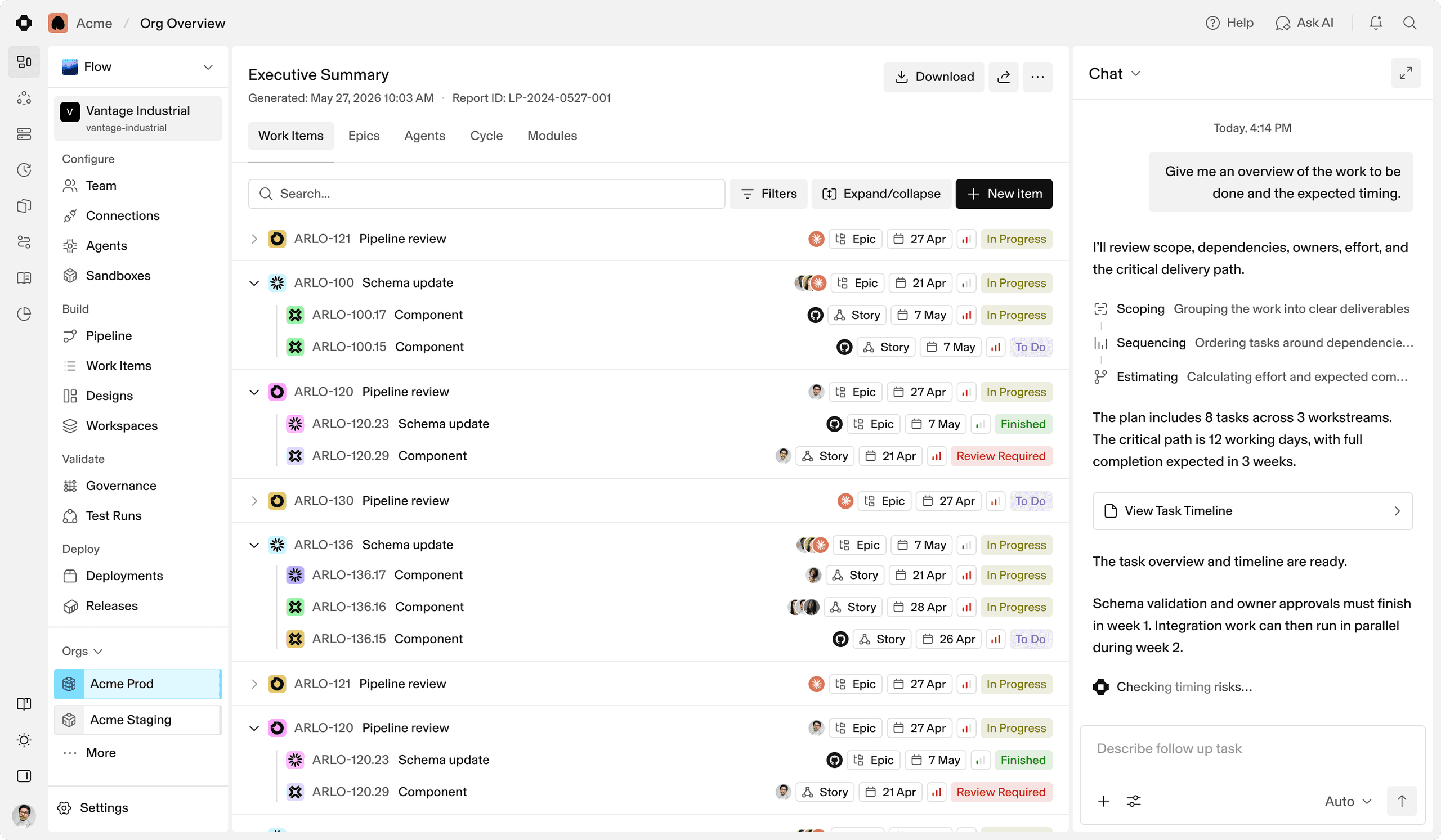
Requests, findings, and roadmap items land in one queue, each with a branch, a sandbox, and an owner.
Work intake
Requests, findings, and roadmap items land in one queue, each with a branch, a sandbox, and an owner.

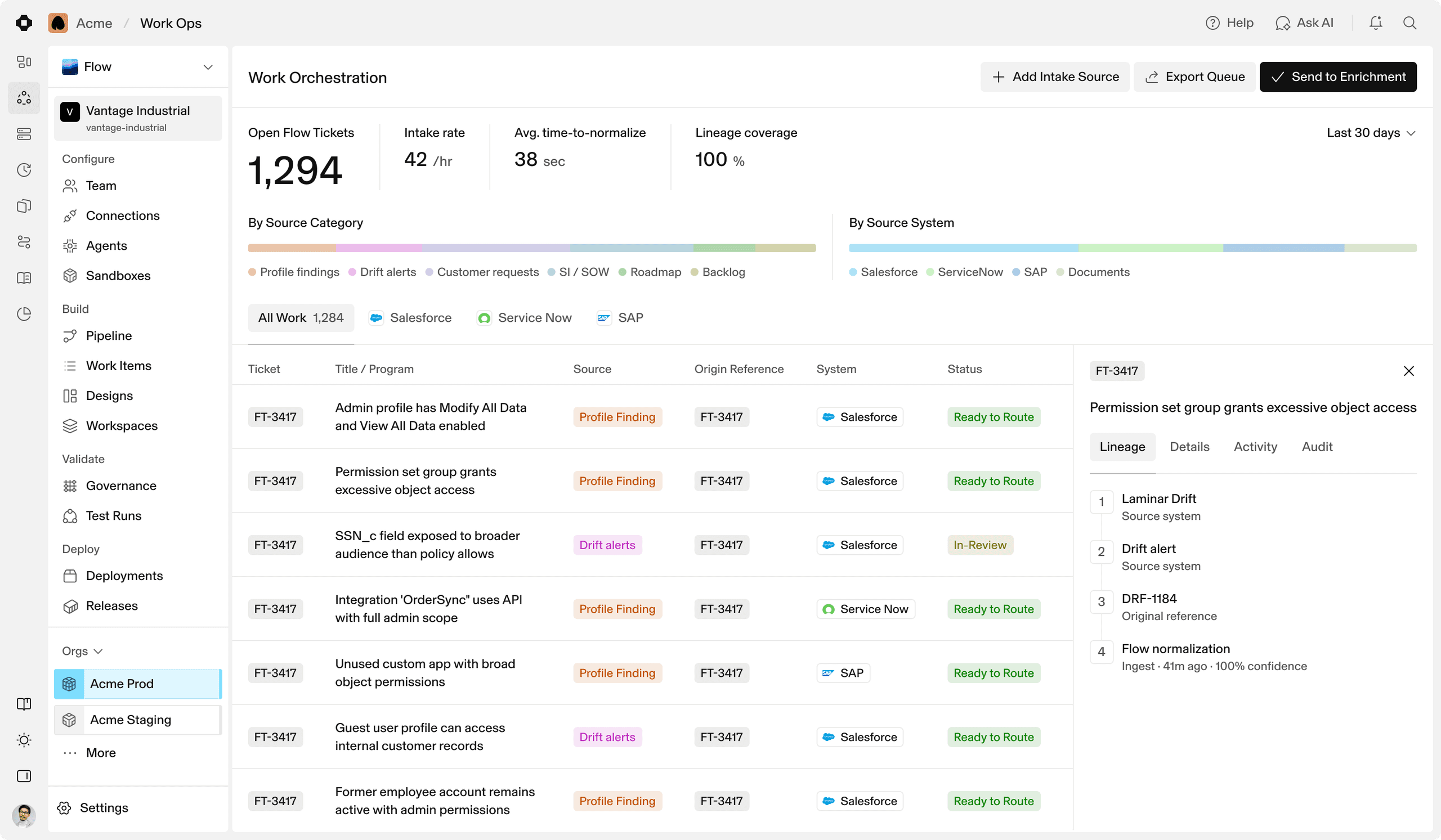
Business requests, Profile findings and Shift roadmap items, one intake.
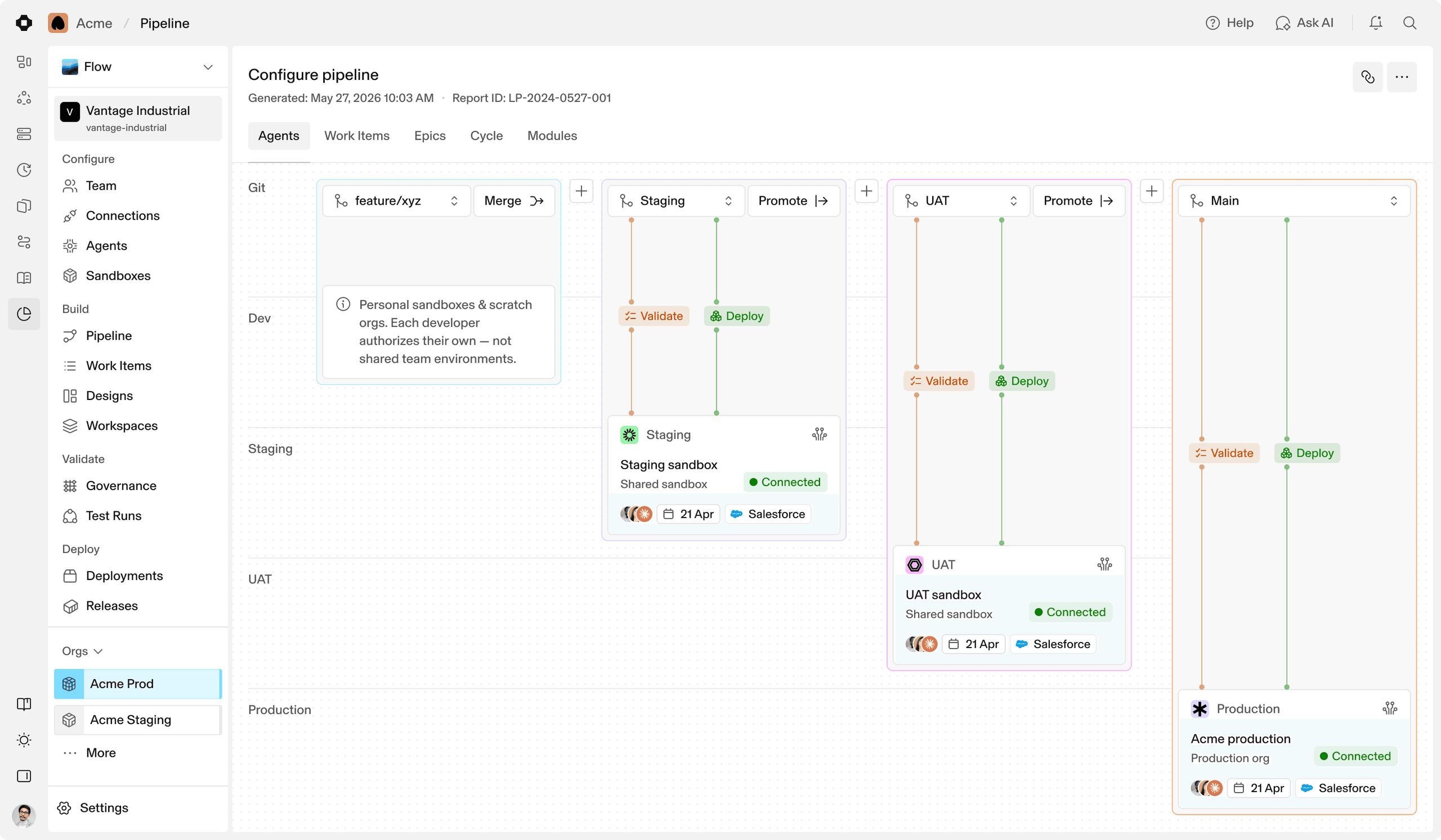
Its own branch and sandbox from the moment it opens.
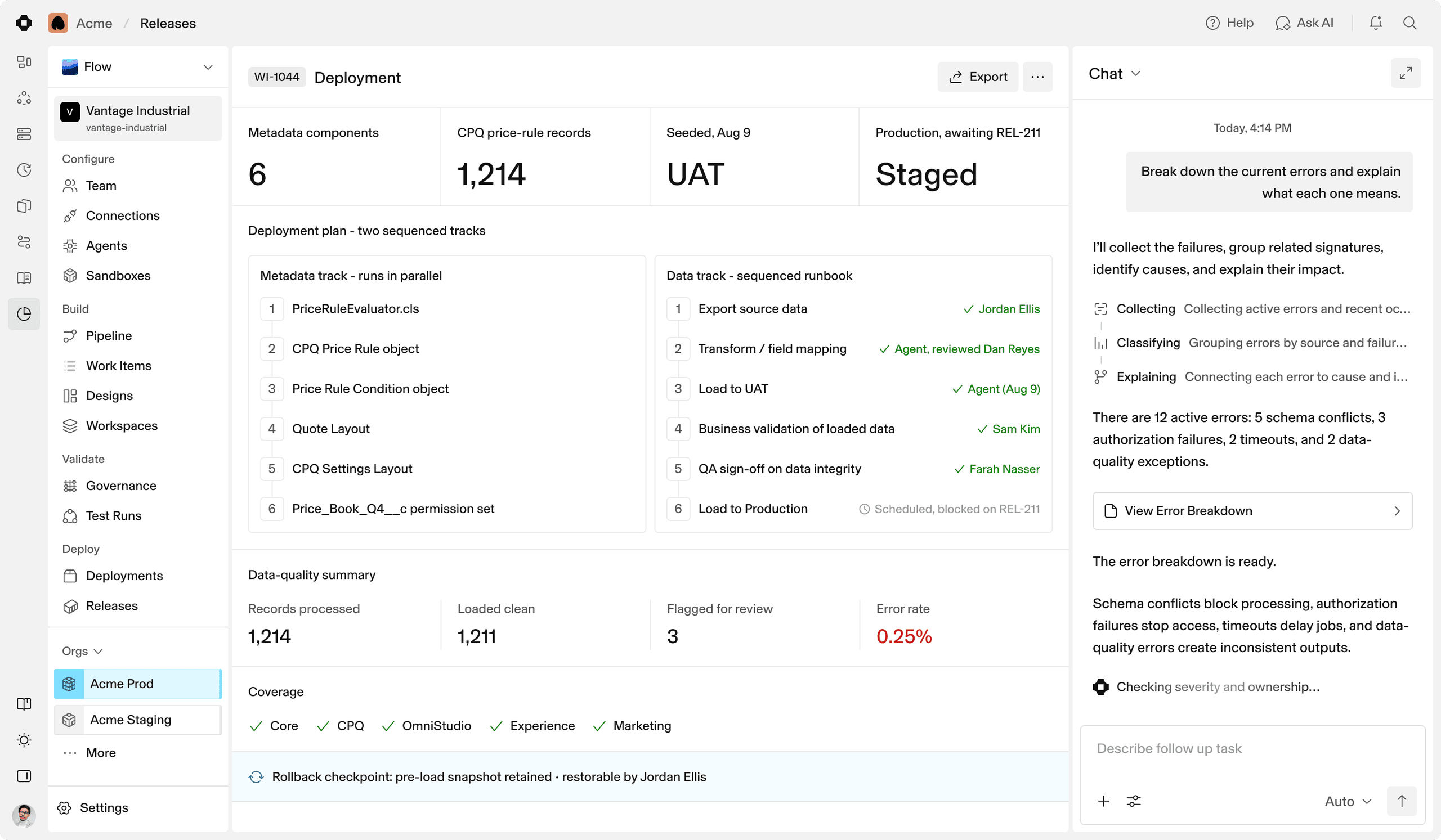
Metadata and data move separately, with a rollback checkpoint between.
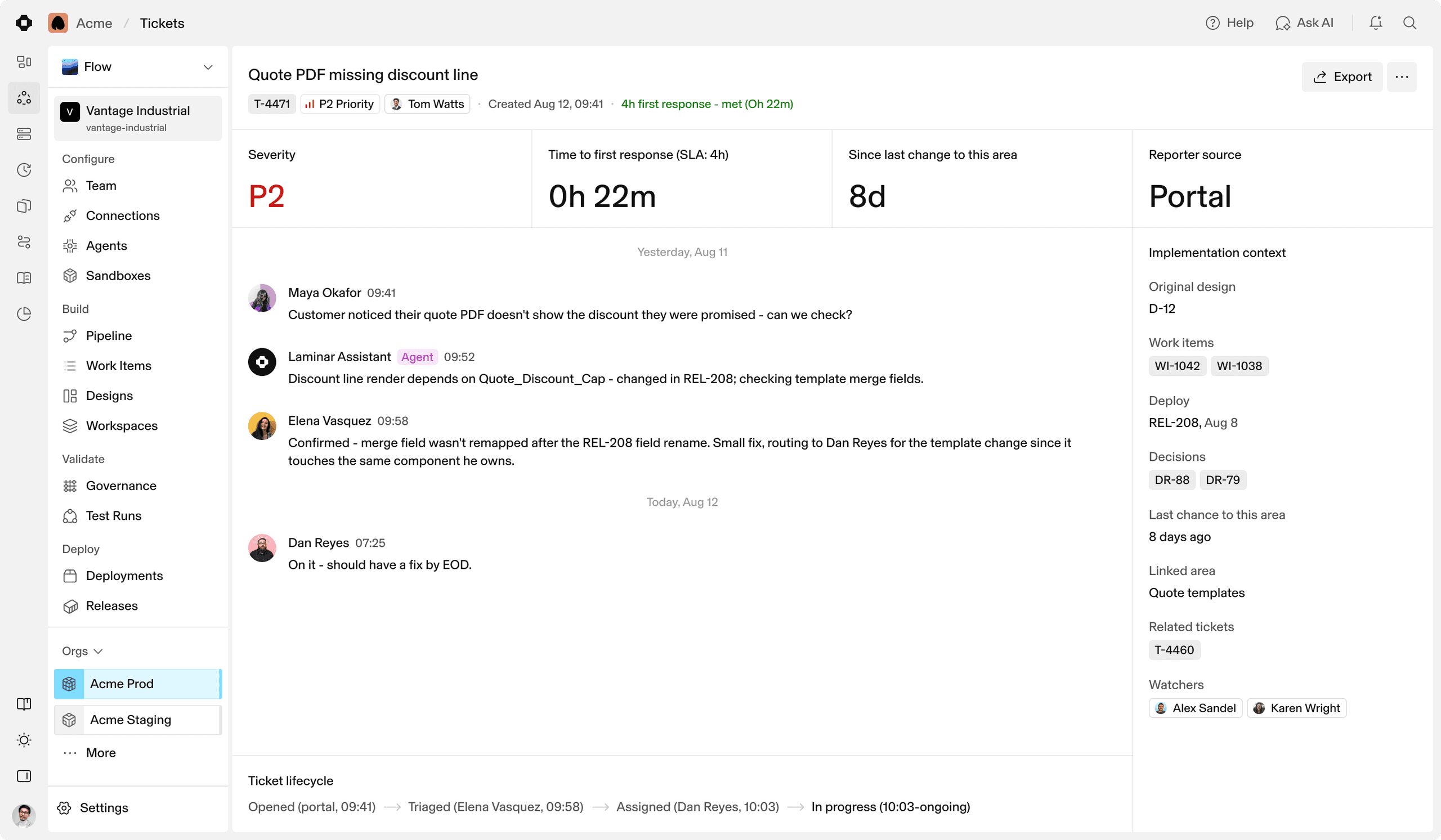
Opened, triaged, assigned, each transition carrying a name and clock.
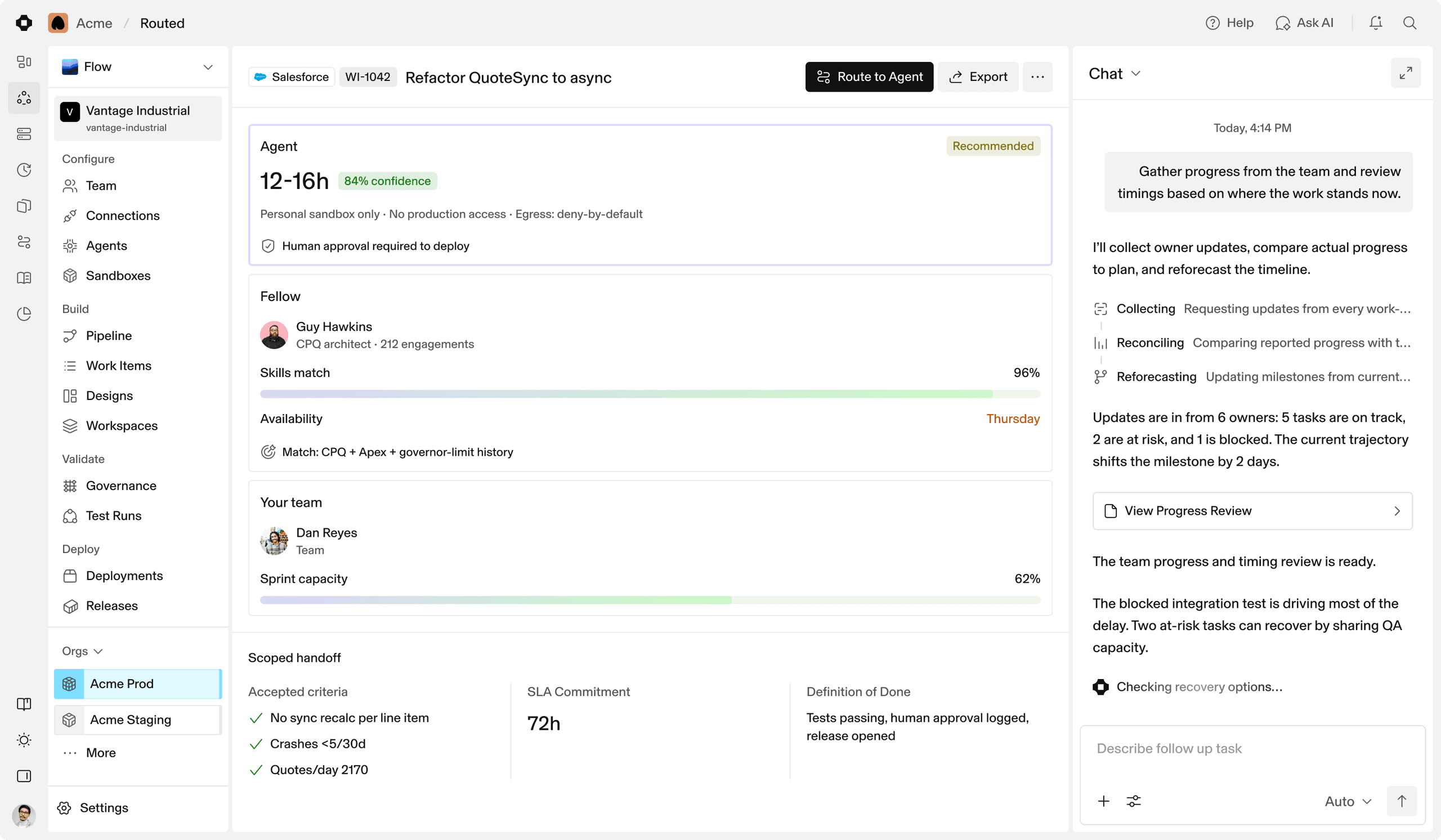
Work needing judgment goes to a Fellow who has done it.
AI agents
The agent does the work in isolation, with no credentials inside the box, and a person decides what ships.
AI agents
The agent does the work in isolation, with no credentials inside the box, and a person decides what ships.
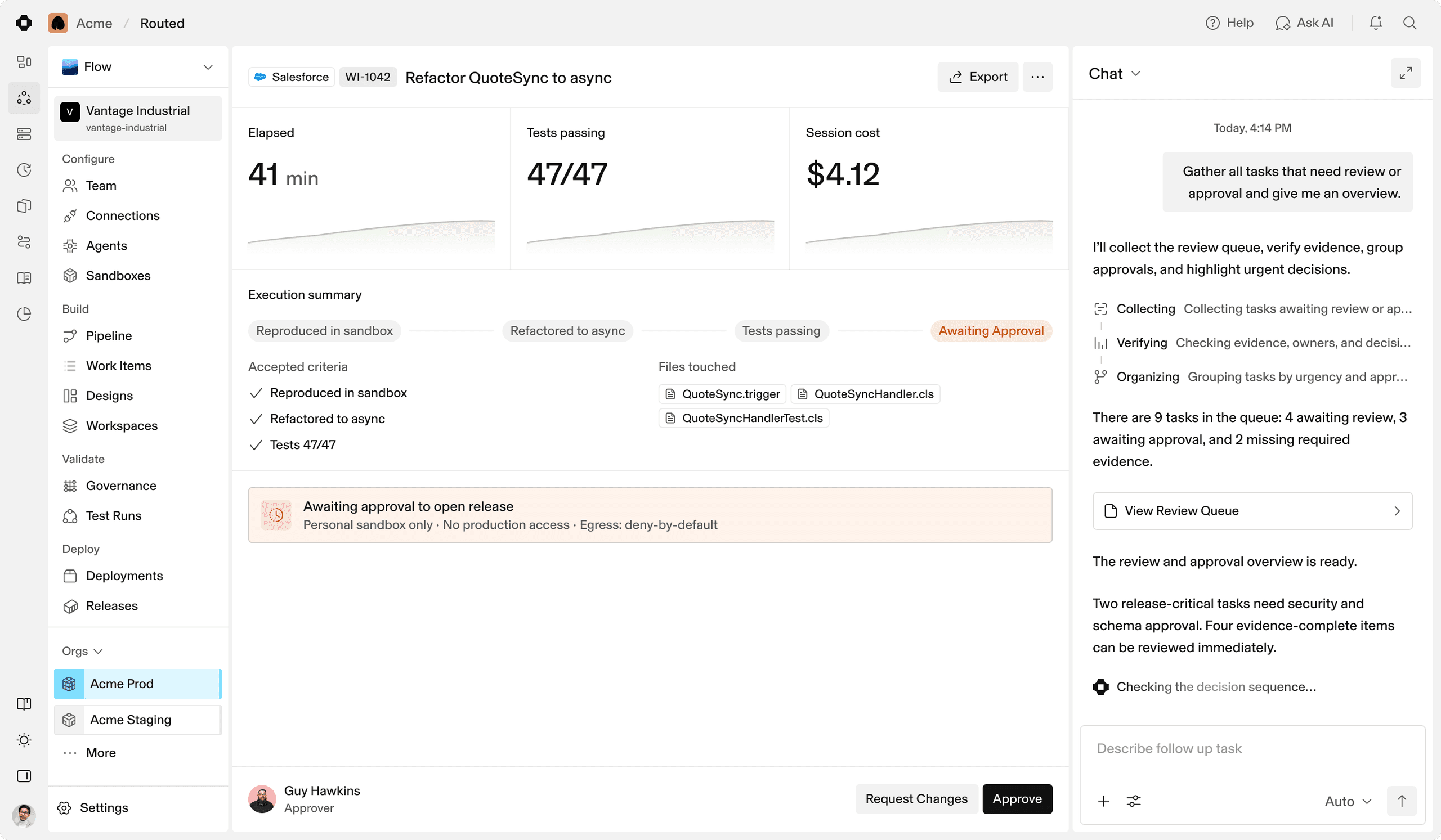
Its own sandbox, no production access, deny-by-default egress throughout.
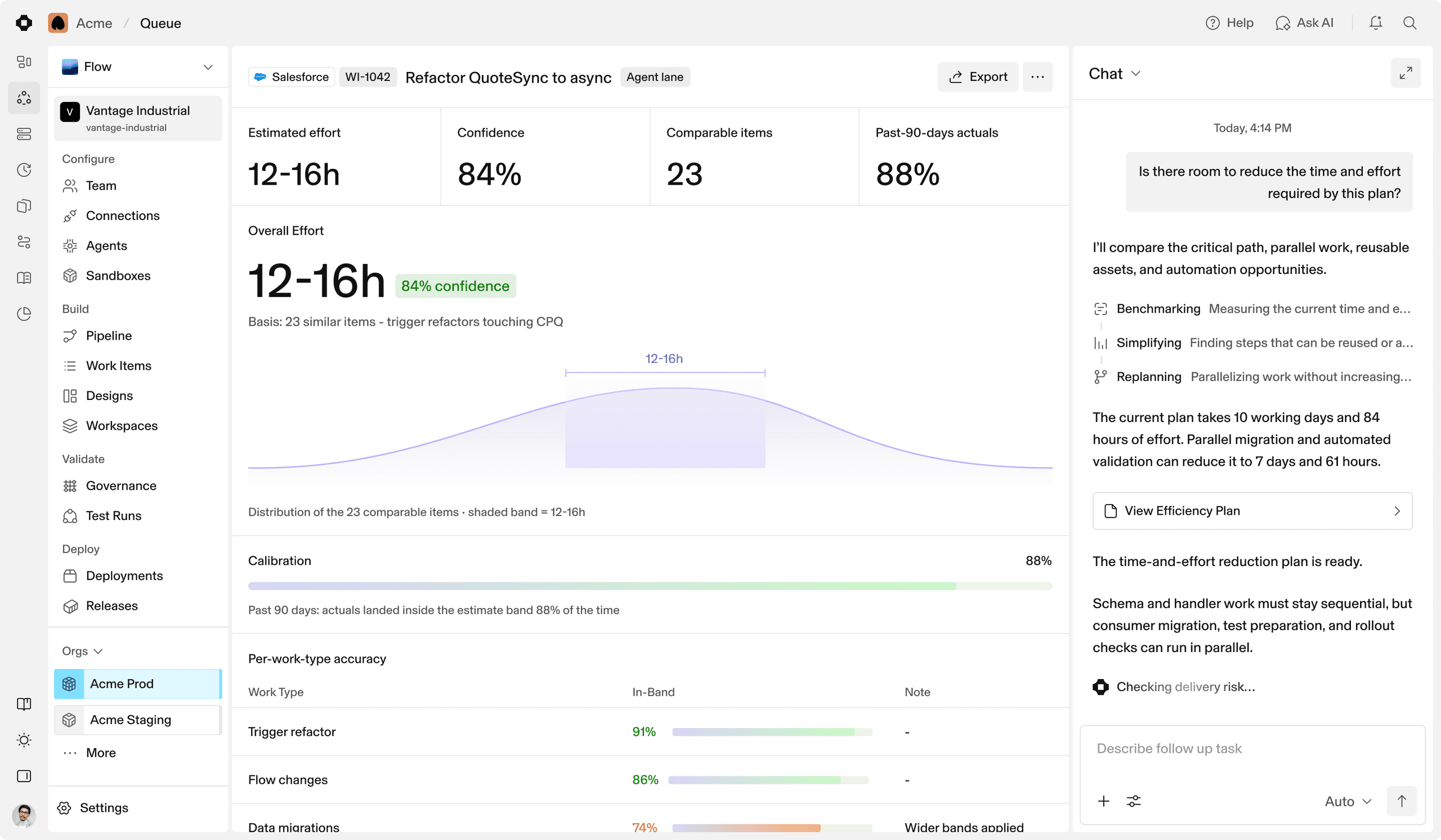
Effort from comparable work, with the calibration behind each number.
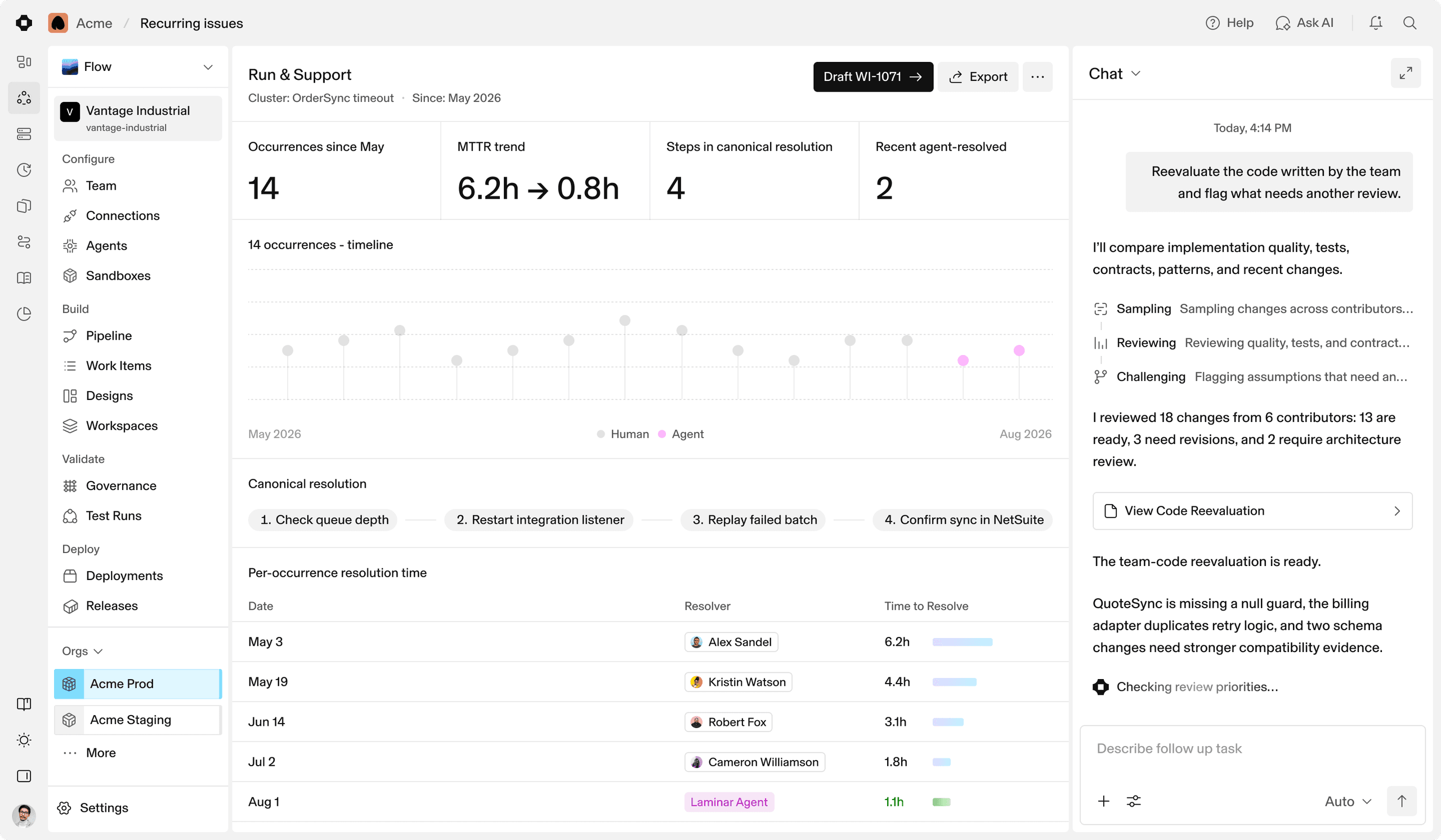
Recurring issues collapse to one resolution path, faster each run.
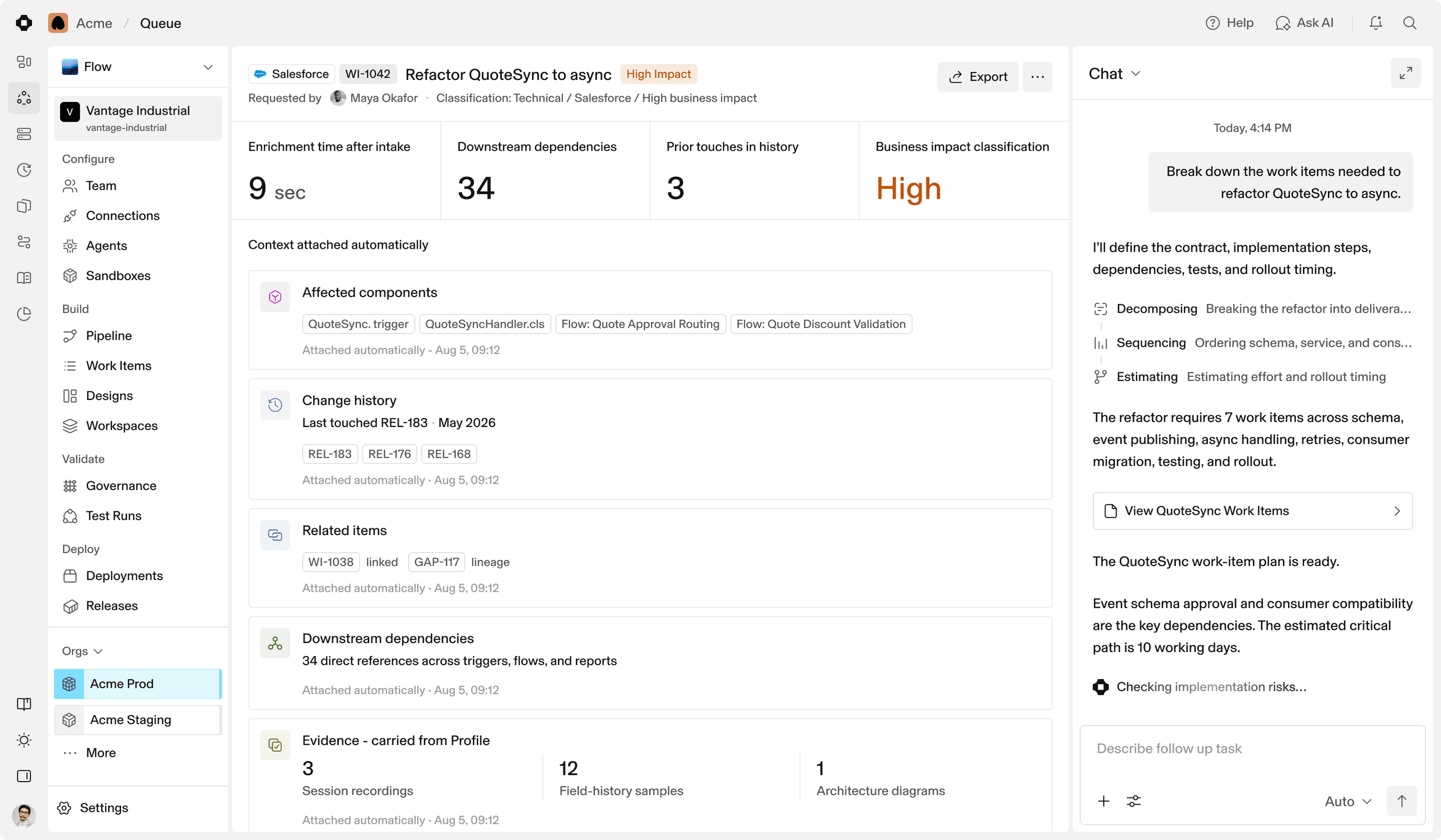
Starts from the work item, its evidence and org history.
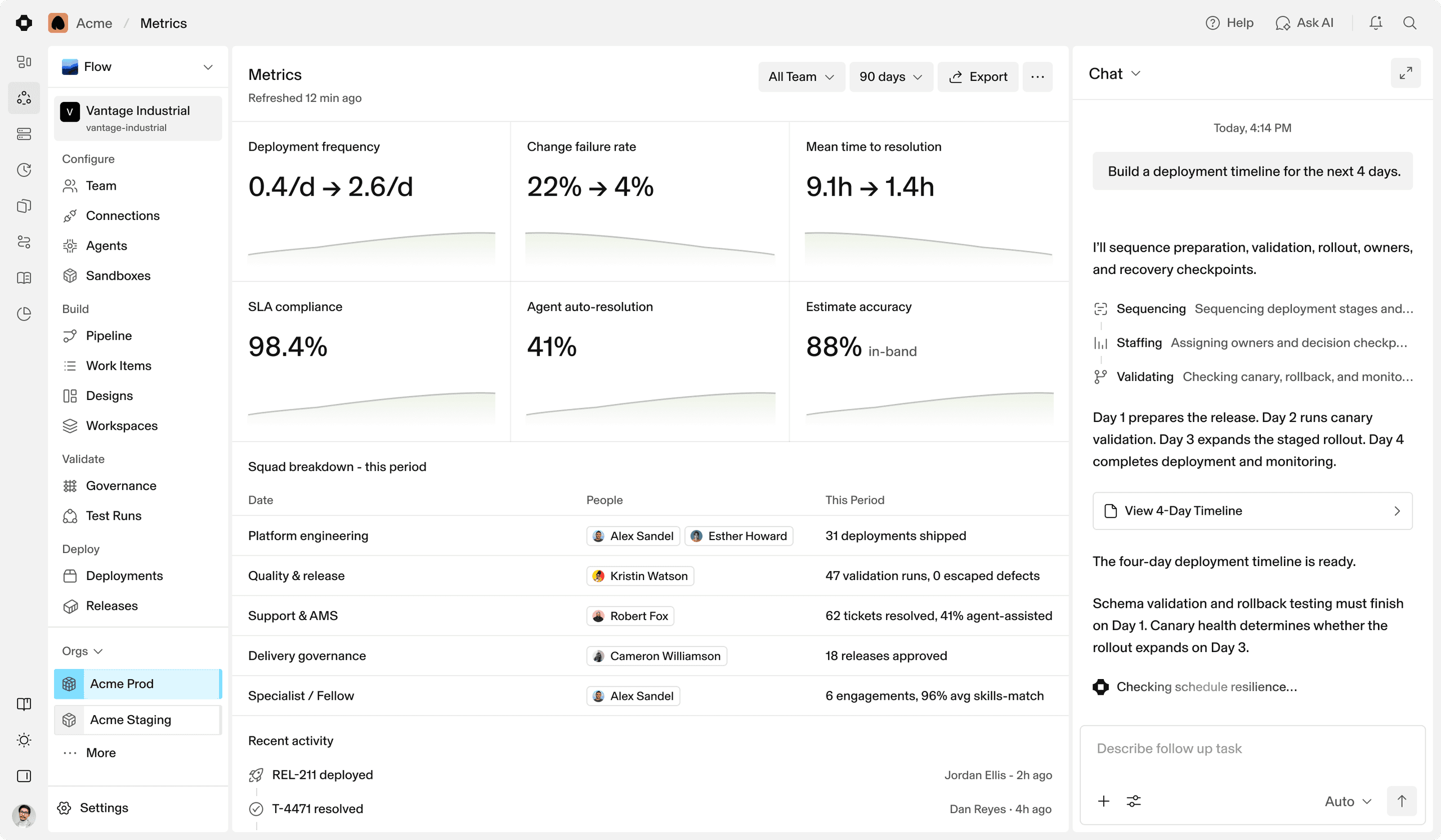
Deployment frequency, change-failure rate and estimate accuracy, by squad.
Deployments
What ships is the difference between your change and production as it is right now.
Deployments
What ships is the difference between your change and production as it is right now.
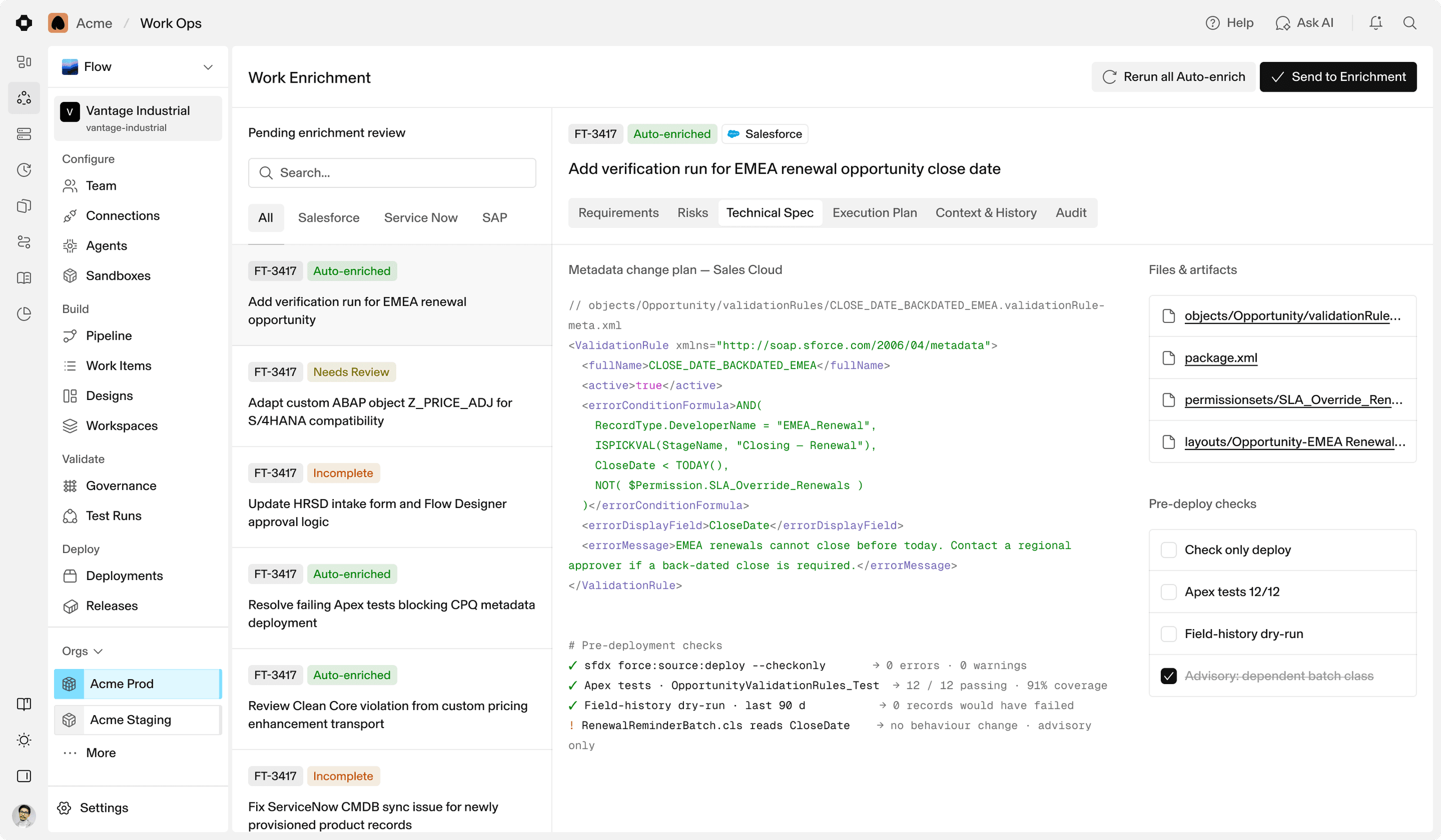
Check-only deploy against production, Apex tests, field-history dry run.
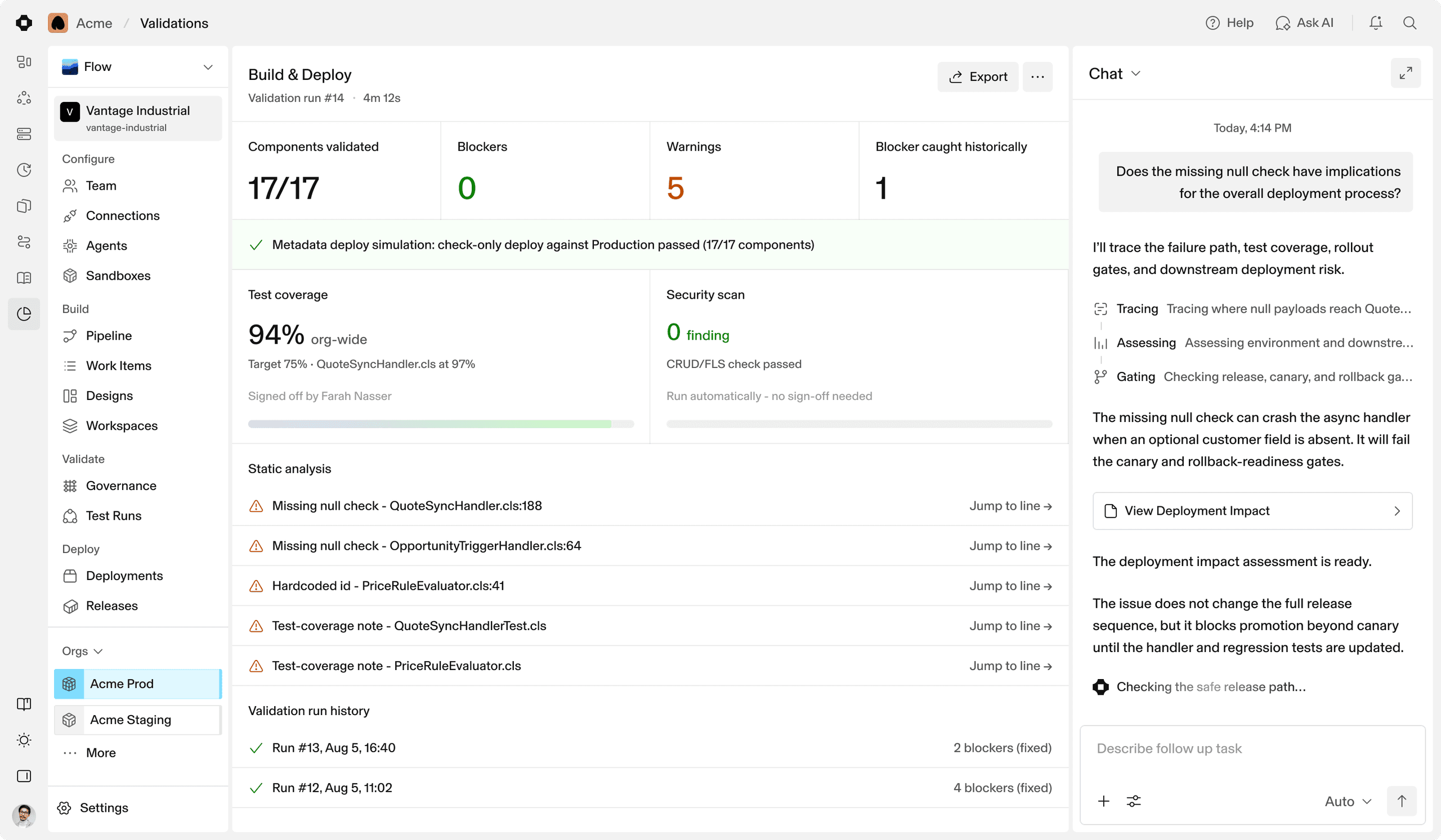
Every validation and deploy runs it. Red stops the deploy.
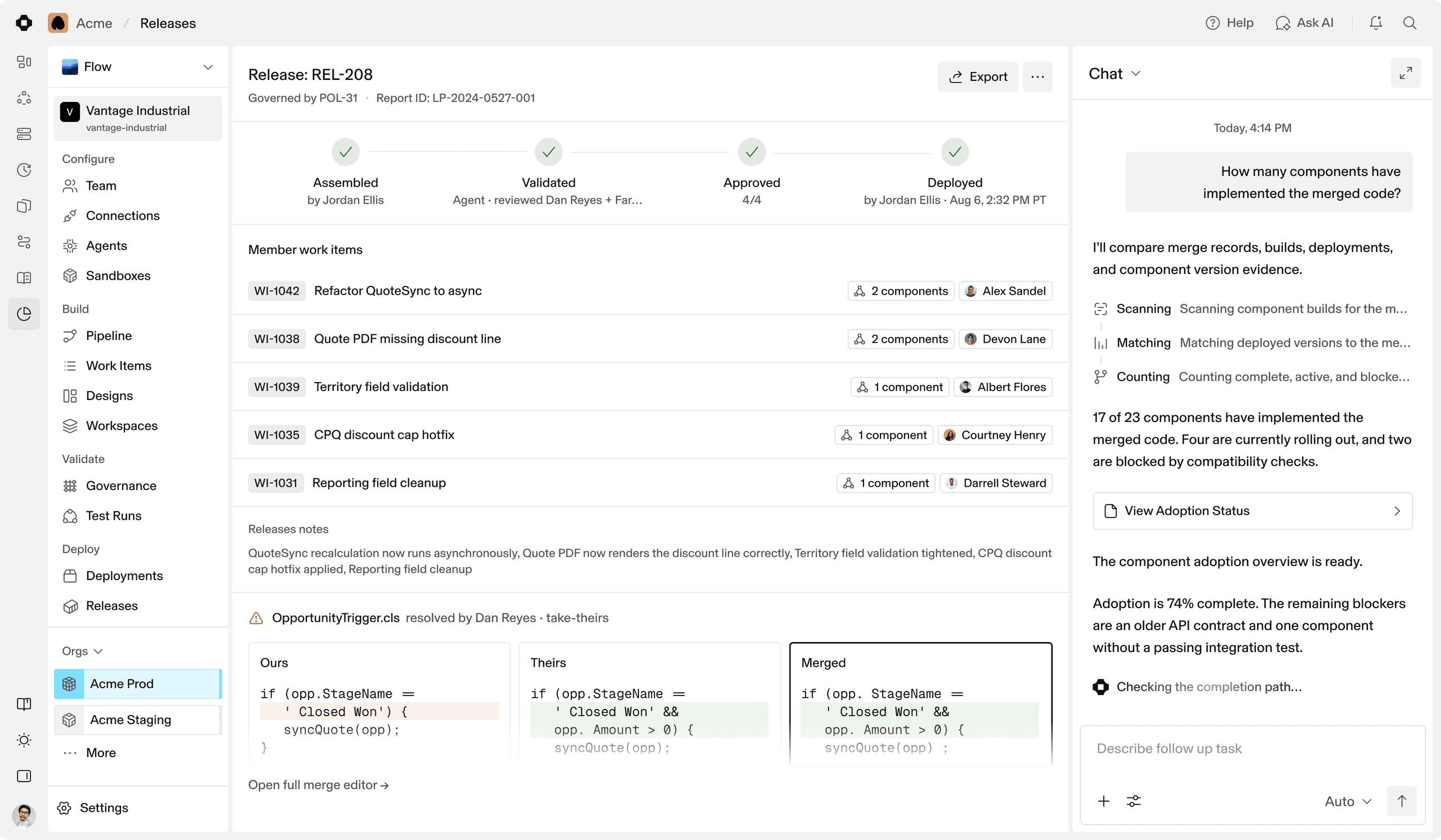
Resolve against the base, the branch and the org, together.
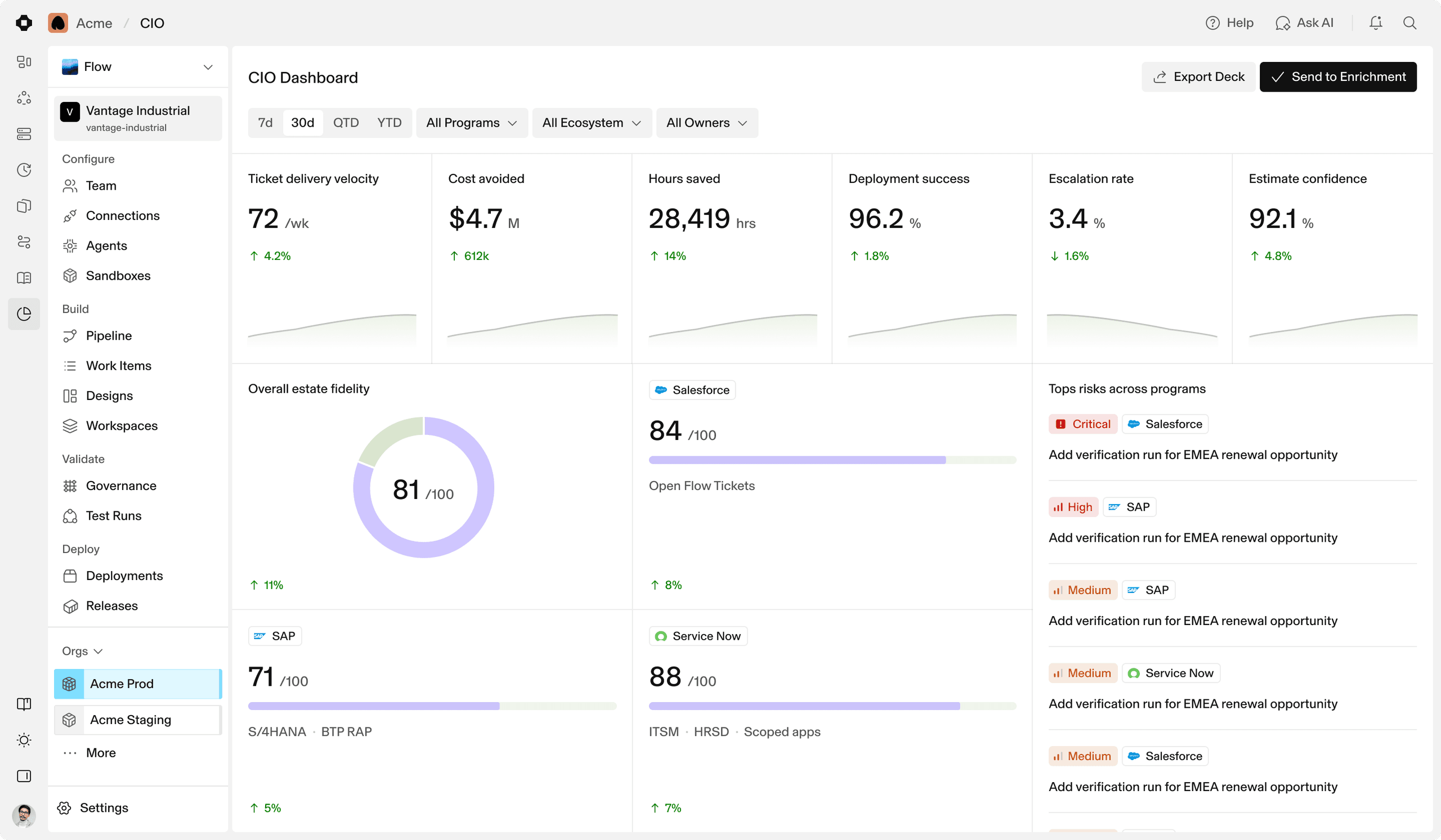
Velocity, cost avoided and hours saved, with the risks surfaced.
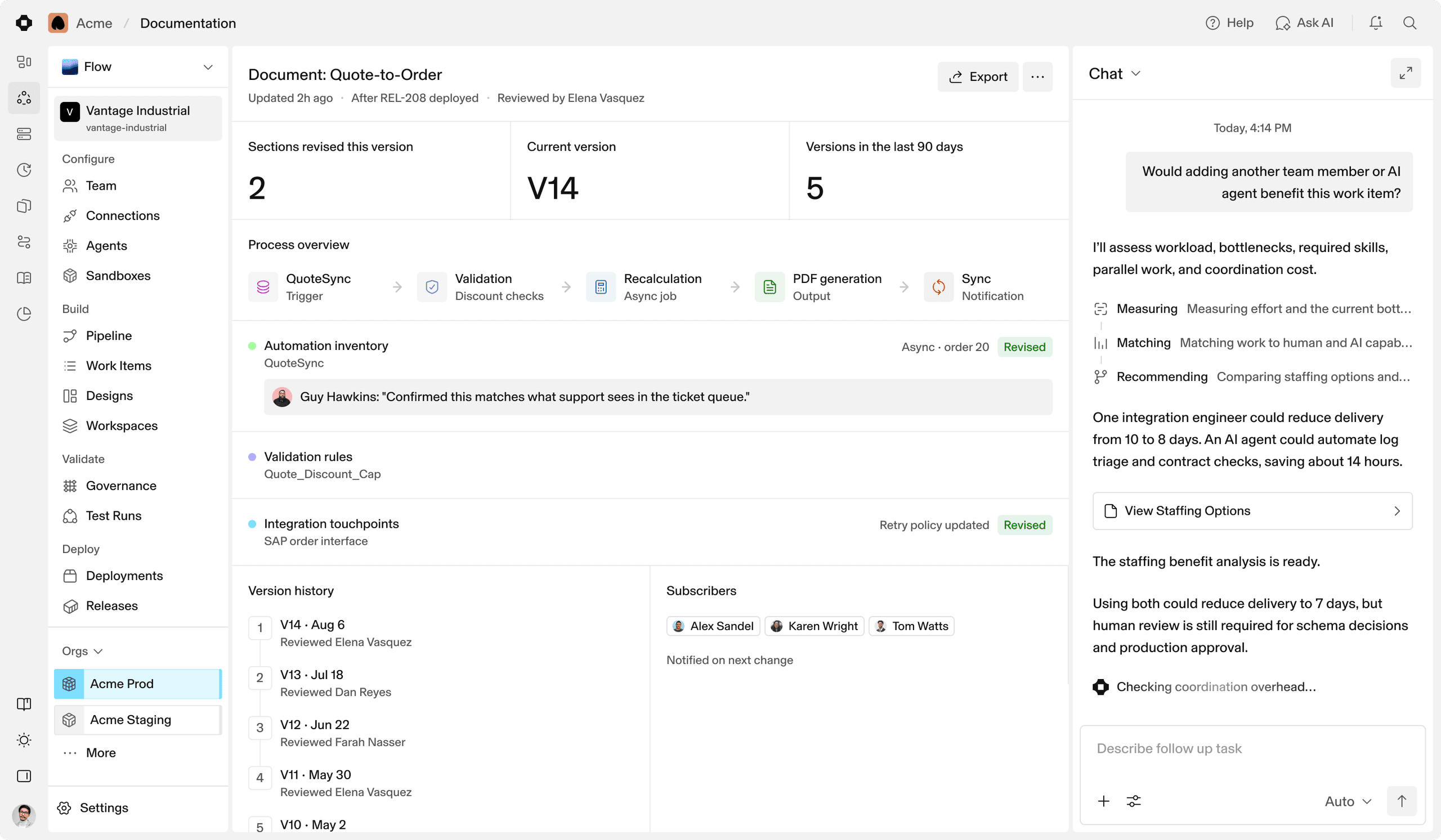
Ship a change and the process doc revises with it.
Why Flow
Tooling alone leaves the work to you, and an SI leaves with the knowledge. Flow is built so neither happens.
Systems owners and functional leads on what changed: cleaner releases, faster escalations, and delivery they can finally measure.
I can have the senior-most engineer dedicate time and figure all these things out. But that's not the value for them to be doing that if it's readily available out of the box with Laminar. The only thing that engineers do at this point is review. And now people with ideas are using that time to build more things, important things, which bring a lot of value to everyone in the company.
What caught my attention with Laminar is its focus on just getting the DevOps portion right. We want to minimize the downtime. By moving fast, I do expect that sometimes things may break. But how do we minimize that? How do we pivot a business process? Having a good, robust tool like Laminar is helping us unlock it.
A lot changed for the business because of this work. The biggest change was we had a controlled and clean contracting process. We saw less revenue leakage, consistent pricing margins, and our executive team was thrilled.
Where Flow fits
Shift and Profile decide what's worth doing. Flow does it and keeps it running, and Ascent makes every deploy clear the same gates.